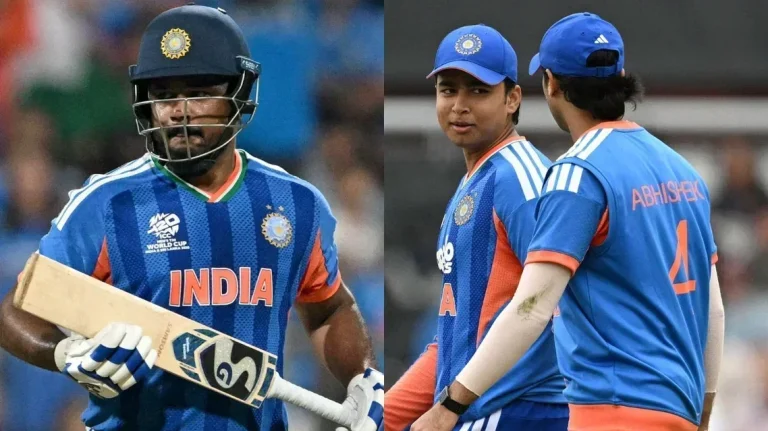
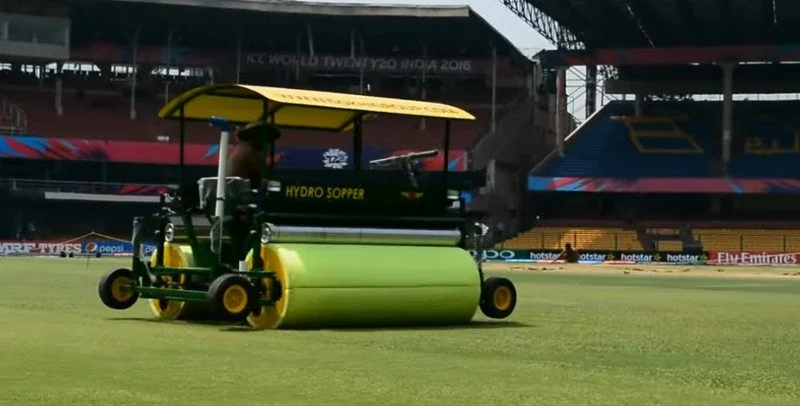
Dew can affect a cricket match by making the ball wet and harder to grip. That can reduce bowling control, make fielding more difficult and influence a captain’s decision to chase. The dew factor in cricket matters most when conditions change between innings, but it does not guarantee a win for the team batting second.
A captain mentions dew at the toss. A few overs later, a bowler reaches for a towel before every delivery. The connection is simple: moisture on the outfield can transfer to the ball each time it rolls across the grass.
The useful question is how those conditions change the contest. A slippery ball, an accurate bowling attack and a demanding target can all be part of the same match.
What is the dew factor in cricket?
The dew factor in cricket is the effect of surface moisture on the ball, the players’ control and match decisions. Dew forms through condensation when a surface cools to the dew point of the air beside it.
The Met Office’s explanation of dew describes why droplets can appear on grass during the evening or morning. Rain is not required. A cool evening alone, however, does not tell you how much moisture will collect.
Dew and rain are different processes. Dew forms on a surface; rain falls from clouds. A wet outfield can have either cause, so moisture alone is not enough to identify dew.
How does dew affect bowling?
Dew can make bowling harder by interfering with a secure grip and a repeatable release. Both spinners and fast bowlers need control of the ball to deliver their intended line, length and variation.
Spin bowling with a wet ball
A spinner needs to release the ball with the intended rotation. If moisture makes the fingers slip, control can become less reliable. That does not mean every delivery stops turning: the bowler’s release and the pitch still matter.
Fast bowling and slower deliveries
A fast bowler may find a cutter or another grip-dependent variation harder to execute. In ICC reporting before the 2014 World T20, England practised with wet balls, and Stuart Broad discussed the challenge for both pace and spin.
Consider a hypothetical final over. A bowler plans a slower ball but cannot grip it confidently. Choosing a familiar delivery may improve control, although the batter may be better prepared for its pace. Dew adds a decision; it does not supply one correct answer.
Does dew make batting easier?
Dew can help batters when the opposition struggles to control a wet ball, but easier batting is not automatic. The opportunity comes from the deliveries the batter actually receives, not simply from the presence of moisture.
An intended yorker that becomes a full toss may offer a scoring chance. An accurately delivered yorker remains difficult. Likewise, a batter who needs boundaries cannot assume that dew will produce enough mistakes.
The surface also matters. Our guide to cricket pitch types explains why bounce and movement deserve separate attention. A wet outfield does not prove that the pitch has become flat or predictable.
How does dew affect fielding?
Dew can make picking up, catching and throwing the ball more difficult because players are handling a wet surface. They may need extra care to secure the ball before releasing a throw.
Imagine a fielder rushing a pickup to prevent a second run. A fumble could cost that run; taking a moment to gather cleanly could keep the batters at their ends. The situation determines which risk is sensible.
Field placement still matters. Our cricket fielding positions guide explains the jobs captains assign around the ground. Changing a fielder’s position cannot remove the need for clean handling.
Why can dew favour chasing in T20 cricket?
Dew can favour chasing if the team bowling second faces a wetter ball than the team that bowled first. This possible difference helps explain why a captain may prefer to field first.
Dew in T20 cricket attracts attention because each side has a short innings and limited time to recover from expensive overs. Our T20 cricket explainer sets out how those innings work. Dew can also matter in an ODI played into the evening.
Suppose a side needs 48 from four overs with six wickets left. Even with a slippery ball, it still needs 12 runs per over. Two accurate overs or a wicket can change the chase quickly. This is an illustrative example, not a claim about a particular match.
A captain must weigh expected moisture against early pitch conditions, team strengths and the risk of conceding a large total. Dew and chasing are connected, but bowling first is not always the better choice.
How do teams manage a wet ball in cricket?
Teams prepare for wet-ball conditions and adjust their plans to the control their bowlers can maintain. Towels can help remove surface moisture, although the ball may become wet again on the next trip across the outfield.
Practising with a wet ball helps players assess which releases and handling techniques remain dependable. During the match, a captain can reconsider the bowling order rather than assume the pre-match plan will work unchanged.
For viewers, repeated drying and visibly damp grass are useful clues. They should be considered alongside the quality of the deliveries, the field and the required scoring rate.
Dew Factor in Cricket FAQs
These dew factor in cricket FAQs explain how dew affects cricket, why captains discuss chasing and what a wet ball means for bowlers and fielders.
1. What does the dew factor in cricket mean?
It means the influence of dew on playing conditions. Moisture can transfer from the grass to the ball, affecting grip, handling and tactical decisions.
2. Does dew always help the chasing team?
No. Dew may make defending harder, but the target, wickets, pitch and execution still matter. The expected moisture may also arrive late or remain light.
3. Does dew affect fast bowlers as well as spinners?
Yes. Both need a reliable grip and release. The difficulty varies with the bowler and the delivery being attempted.
4. Can dew form without rain?
Yes. Dew forms through condensation on a sufficiently cool surface. It does not require rain to fall.
5. Why do bowlers use towels when there is dew?
They use towels to remove surface moisture and help their grip. Drying is temporary if the ball keeps travelling across wet grass.
6. Should a captain always bowl first when dew is expected?
No. A dew forecast is one factor in the toss decision. Captains also need to consider the pitch, their bowling options and the strength of their chasing lineup.