LBW in cricket can look obvious until the replay appears. The ball hits a pad, the bowler appeals, and the screen shows “pitching outside off” or “umpire’s call”. Why can one delivery be out while another, apparently heading towards the same stump, is not?
The answer is that hitting the wicket is only one part of the decision. An umpire must also consider the delivery, contact with the bat, where the ball landed and where it struck the batter. Follow those checks in order and most LBW debates become easier to understand.
What is LBW in cricket?
The LBW full form is Leg Before Wicket. It is a dismissal that can apply when a batter’s body intercepts a ball that would otherwise hit the wicket, provided the remaining conditions are satisfied. Despite its name, the ball does not have to strike a leg.
The basic law applies across Test, ODI and T20 cricket. The length of a match changes the tactics around taking wickets, but does not turn every pad contact into an automatic dismissal.
LBW rules explained: the five checks
MCC Law 36 sets out the conditions. For a beginner, this checklist captures the essentials:
- No no-ball: the delivery must not be a no-ball.
- Acceptable pitching: if the ball bounces before impact, it must land between the wickets or on the off side, never outside leg stump.
- No bat first: it must hit the batter’s person without previously touching the bat.
- Acceptable impact: when a genuine shot is attempted, impact must be in line with the wickets. Without a genuine shot, impact outside off stump can also qualify.
- Wicket threatened: without the interception, the ball would have hit the wicket.
All the relevant conditions must hold. An enthusiastic appeal cannot rescue a delivery that fails one of them.
Pitching outside leg vs impact outside off
Pitching describes where the ball first bounces. Impact describes where it first strikes the batter’s body. They are different events, and confusing them causes many arguments.
A ball pitching outside leg stump cannot produce an LBW dismissal, even if it straightens towards middle stump. Pitching outside off stump, however, does not automatically protect the batter.
For impact outside off, the shot matters. A genuine attempt to play the ball protects the batter from LBW when impact is outside off. Leaving the ball removes that protection, although every other condition must still be satisfied. Impact outside leg remains not out LBW.
Three LBW examples to follow
These invented examples assume a fair delivery and no initial bat contact.
Example 1: Straight ball, straight decision
A right-handed batter misses a full delivery. It pitches in line, hits the front pad in line and would strike middle stump. The conditions support an out decision. The batter’s intention to defend does not cancel an otherwise valid LBW.
Example 2: Turning in from outside leg
A spinner lands the ball outside leg stump. It turns sharply, hits the pad in front of middle and would hit the wicket. The decision is still not out LBW because the landing position fails the test.
Example 3: Leaving outside off
A batter raises the bat and lets a delivery go. The ball strikes the pad outside off but would continue into off stump. LBW is possible because no genuine shot was attempted. The umpire still needs to assess the complete delivery.
How DRS and umpire’s call work
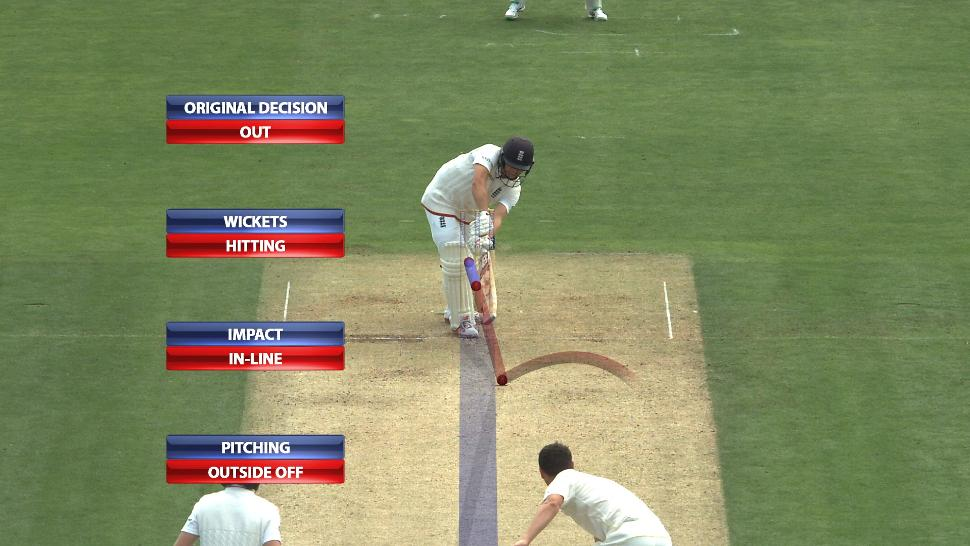
The featured graphic offers a useful viewing exercise: its labels show pitching outside off, impact in line and wickets hitting. Read them separately rather than looking only at the red trajectory. The image illustrates the tracking stages; the complete decision also depends on checks such as a no-ball and any earlier bat contact. When watching live, pause before the final verdict and identify which condition is actually disputed. This habit makes commentary much easier to follow.
The Decision Review System lets players challenge eligible decisions where the competition provides it. Replays can establish bat contact, while ball tracking presents pitching, impact and the projected route towards the wicket.
Umpire’s call preserves the original decision on specified marginal tracking judgements. In an ordinary LBW review, if the other requirements are satisfied and wicket contact is umpire’s call, an original out remains out; an original not out remains not out. It does not mean the third umpire simply chooses a preferred outcome.
Use the applicable ICC playing conditions for the detailed review procedure. Avoid treating an old television explanation as a universal rule for every tournament.
Common LBW misunderstandings
“It hit the pad, so it is out.” Pad contact starts the question; it does not answer it. Height, line and earlier bat contact can all change the decision.
“The ball must bounce first.” A full toss can result in LBW. The umpire considers the required conditions and the ball’s continuing path.
“Bat after pad saves the batter.” A later touch with the bat does not erase the first interception. If bat and body contact are simultaneous, the law treats the bat as first.
“Movement guarantees LBW.” Movement can create an opportunity, but can also carry the ball past the stumps. Our swing vs seam bowling guide explains why the ball’s route deserves attention.
Frequently asked questions
1. What does LBW stand for?
LBW stands for Leg Before Wicket, a dismissal governed by specific conditions concerning the delivery, contact and projected path.
2. Can a batter be LBW after an inside edge?
No, if the ball touches the bat before the body. The order of contact is crucial.
3. Can you be LBW without playing a shot?
Yes. Impact outside off can qualify when no genuine shot is attempted, but the other conditions still apply.
4. Is LBW possible on a no-ball?
No. A no-ball rules out LBW, regardless of where the ball would have travelled.
5. How should beginners watch an LBW replay?
Check legality and bat contact first, then pitching, impact and the projected wicket contact. Keep each question separate. Watch the sequence, not the appeal.