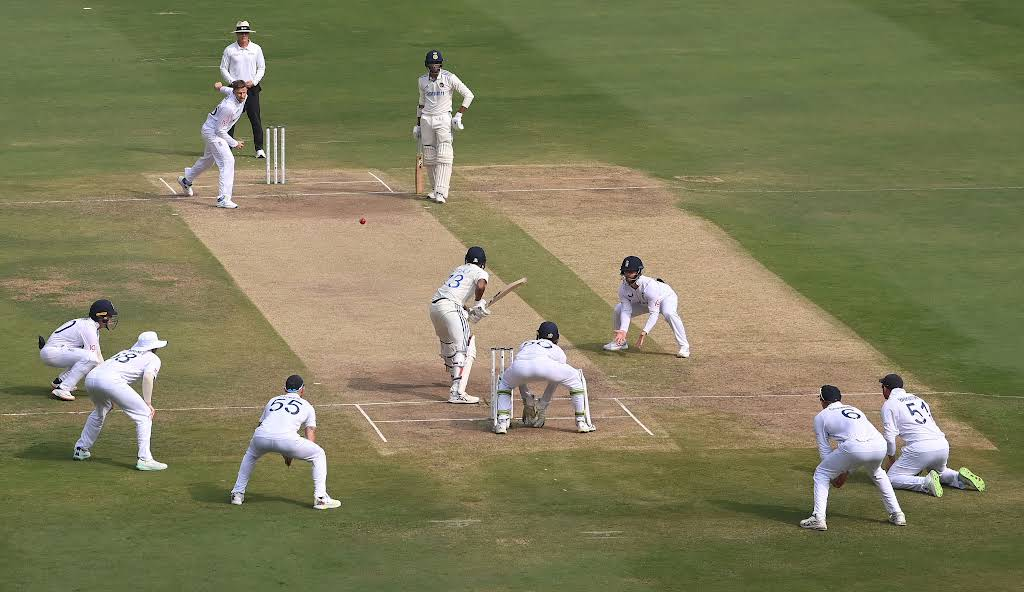
Cricket pitch types influence movement, bounce and scoring—but reading a surface means looking beyond its colour.
Why can a batter drive confidently in one match and struggle to time the same shot in another? The bowling matters, but so does what happens when the ball hits the pitch. A surface can reward patience, encourage attacking strokes or make a captain rethink the bowling attack.
Green, dry and flat are useful starting descriptions, not separate boxes into which every pitch neatly fits. A strip can be dry and good for batting, or grassy without producing dramatic movement. This guide builds on the broad categories in AllCric’s pitch-type overview, with practical examples of how teams might respond.
What determines how a cricket pitch plays?
The key qualities are hardness, surface evenness and friction between ball and pitch. Soil, preparation, moisture, grass and wear interact; one visual clue cannot explain everything. The Grounds Management Association’s pitch-performance guidance explains these relationships in detail.
For viewers, separate three questions: how quickly does the ball reach the batter after bouncing, how high does it rise, and does it change direction? “Slow” and “low” are not interchangeable, and a lively bounce is different from sideways movement.
1. Green pitches: why seam bowlers may benefit
A green pitch has noticeable grass coverage. Lush grass and moisture around the leaves can encourage seam movement: deviation after the ball lands. Grass also helps protect the surface from wear. However, the underlying hardness and preparation still matter.
Seam and swing are different. Swing is movement through the air, before the bounce; a green pitch does not itself make a ball swing. A delivery can do both, but those are separate effects.
Imagine an opener facing several balls that move away after pitching. In that situation, leaving deliveries outside off stump and playing closer to the body may be safer than reaching for a drive. The bowler, meanwhile, might repeat a testing line rather than chase a spectacular delivery every ball. These are tactical responses, not automatic rules for every green surface.
2. Dry pitches: when spin and wear become important
Dryness alone does not guarantee sharp turn. A worn, rough surface can increase grip, while excessive drying may reduce bounce. Cracks matter when they affect ball behaviour; a visible crack is not proof that every delivery will misbehave.
For a spinner, the question becomes whether a particular area offers help. For the batter, it becomes whether to reach the bounce or play back with enough time to adjust. Consider a hypothetical over in which one ball turns and the next goes straight: committing early to the expected turn could be more dangerous than the amount of turn itself.
This is especially relevant across several days. The ECB’s pitch assessment framework recognises that surfaces can change as a multi-day match progresses. Our beginner’s guide to Test cricket explains why teams must plan for more than one innings.
3. Flat pitches: why predictable bounce helps batting
In cricket conversation, a flat pitch usually means a surface offering relatively little assistance to bowlers and dependable bounce. It does not mean the soil must be soft or lightly rolled. “Flat” describes how straightforward batting feels, rather than a precise construction method.
Predictability lets a batter commit to a shot with greater confidence. But it does not remove the need to judge length, find gaps or manage risk. Equally, a bowler can still create chances through accuracy, changes of pace and effective field placement.
Take an illustrative T20 situation: a batter repeatedly hits a comfortable length through cover. The captain could protect that boundary and ask the bowler to change the angle or length. The pitch informs the plan, but execution decides whether it works. This connects with the innings management covered in our T20 cricket guide.
How to read a pitch without overreacting to its appearance
Before play, treat the pitch report as a forecast. During play, test it against what you see. Are batters mistiming ordinary deliveries? Is the wicketkeeper taking the ball comfortably at a consistent height? Are edges caused by movement or by a batter chasing a wide delivery?
The toss decision should also account for the format, the available bowlers and how conditions may change. Bowling first to use early assistance has a trade-off if batting later becomes harder. Batting first to avoid that possibility has a trade-off if the opening spell is difficult. Neither choice follows automatically from a green or brown appearance.
Fielding limits add another layer in limited-overs cricket. A captain cannot always place every fielder where the pitch suggests; our explanation of ODI vs T20 fielding restrictions shows how those constraints change across an innings.
Cricket Pitch Types FAQs: Green, Dry and Flat Pitches
These common questions about cricket pitch types explain how surface conditions relate to batting, pace bowling and spin. Use the answers as starting points, then judge the actual bounce and movement during the match.
1. Which cricket pitch type is best for batting?
A flat surface with predictable bounce is generally the most comfortable. However, a batter still has to assess the bowling, match situation and any changes in conditions. A batting-friendly pitch does not guarantee a large score.
2. Does a green cricket pitch always favour fast bowlers?
No. Grass can help seam bowling, but colour alone is insufficient. Watch whether deliveries actually move after pitching before deciding how much assistance the bowlers are receiving.
3. Is a dry pitch good for batting or bowling?
A dry pitch can suit batting when it remains hard and offers predictable bounce. If its surface becomes worn and provides grip, spin bowlers may benefit. Dryness alone does not decide the advantage: watch the pace, bounce and turn, and how they change during the match.
4. What is the difference between a flat pitch and a dead pitch?
The terms overlap. Flat usually suggests comfortable batting; dead expresses a stronger lack of assistance or life for bowlers. Neither is an official, precisely measured category, and a dead pitch still produces some bounce.
5. Can a cricket pitch change during a match?
Yes. A multi-day match gives teams more time to encounter changing conditions. That is why a decision that looks sensible before the first innings must also consider what batting or bowling later could involve.