Image credit cricinfo
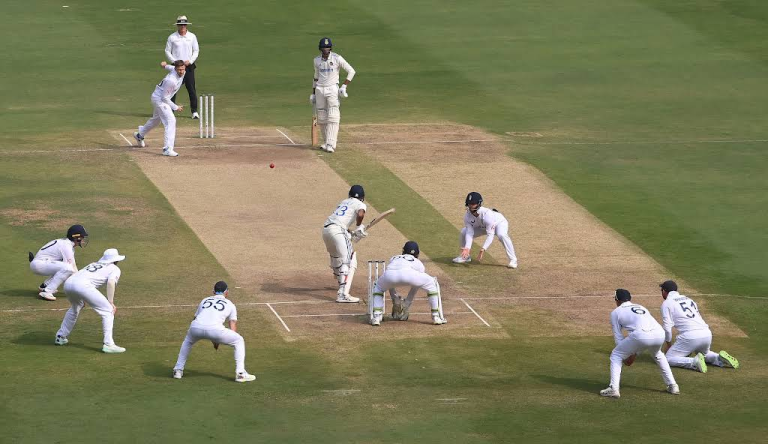
Good cricket batting footwork puts your body in a balanced position to meet the ball. Fuller deliveries often call for a movement forward, while shorter deliveries can give you room to move back. The decision also depends on line, bounce and the shot you can control.
For beginners, the goal is to recognise the delivery and move enough to play it comfortably. A large stride can leave you stretched. A smaller adjustment can be effective if your head, body and bat arrive together. These are starting principles to adapt with a coach as your game develops.
Start with balance and an off-stump reference
Set up with your weight comfortably distributed and your knees relaxed. Keep your eyes as level as feels natural. A small trigger movement may help you prepare, but it should leave you able to move in either direction when the ball is released.
Know where your stumps are before judging what needs to be played. Our guide to taking guard in cricket explains how the mark gives you a reference. Guard alone does not determine your movement or tell you which ball to leave.
Murali Vijay has described balance, a stable head and footwork as important parts of his batting. His comments offer a useful professional perspective on those foundations. Read Vijay on his batting approach.
When to move onto the front foot
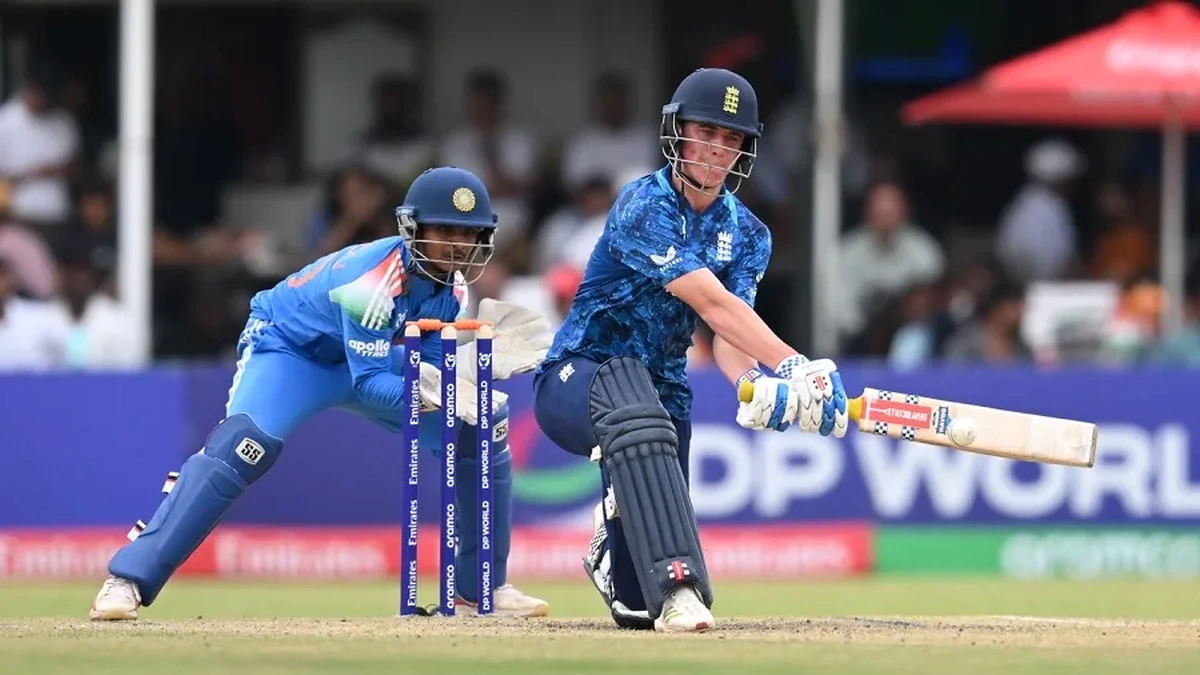
A fuller ball gives you an opportunity to meet it closer to where it pitches. Move your front foot towards the line while allowing your head and upper body to follow. Keep enough space for the bat to come through instead of trapping it behind the front pad.
Suppose a right-arm bowler delivers a full ball near off stump. A controlled forward movement can support a straight defence or drive. If it is wider and moving away, reaching for it may expose the outside edge. The ball still has to justify the shot.
Avoid choosing a fixed stride length before the delivery. A lunge can make a late adjustment difficult, particularly when the ball swings. The difference between a full ball and a good-length ball is explained in our guide to bowling lengths.
When to use the back foot
A shorter delivery often gives the batter more time and space by moving back. Shift back without falling away from the line. From a stable position, you may defend, punch, cut or pull, depending on the ball’s width and height.
Think of a short ball outside off stump. Moving back and across a little may create room for a controlled back-foot shot. A ball closer to the body may require defence or an evasive response. Shorter length does not automatically make the pull the best option.
Pitch pace affects the time available. On a slow surface, a ball can arrive later than expected. On a lively pitch, the same apparent length can rise sharply. Our guide to pitch types and match conditions adds that context.
A simple forward-or-back practice
Begin with a partner gently feeding a soft ball from a suitable distance. Ask for a mixture of fuller and shorter balls. Call the length, move, and finish with a controlled defensive stroke. Pause after contact to see whether you can hold your balance.
Try twelve deliveries, then review the choices. Count how often you recognised the length and finished stable. Increase the variety before increasing the speed. For hard-ball practice, use the protective equipment and coaching supervision appropriate to your age and ability. Lord’s provides structured coaching across different experience levels. Explore Lord’s coaching guidance and programmes.
Read next
Recognising bowling lengths · Playing swing bowling · Taking guard in cricket
Cricket batting footwork FAQs
These answers cover front-foot and back-foot batting, footwork drills and the balance behind a controlled cricket stroke.
1. Should I move forward to every full ball?
Fuller length often suits forward movement, but you still need to judge line and movement. A wide full ball may be better left than chased.
2. How big should my front-foot stride be?
Use a stride that lets your head and body stay balanced. There is no single correct distance for every batter and delivery.
3. Is moving back the same as leaning away?
Moving back creates space while keeping you organised. Leaning away can leave the hands reaching and the body unable to support the shot.
4. Do I need a trigger movement?
Some batters use one and others keep their setup quiet. Judge it by whether it helps you see the ball and react freely.
5. What is a useful beginner footwork drill?
Use mixed-length soft-ball feeds and practise choosing forward or back before a controlled defence. Review balance and decision-making after each set.