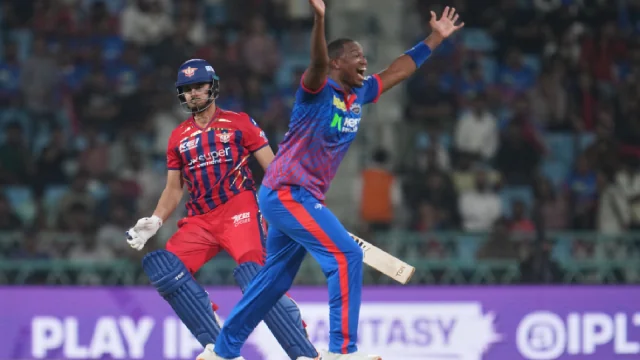
This image is not owned by Behind the Stump. Rights belong to the respective copyright owner.
Slower-ball variations are deliveries designed to arrive later than a batter expects while looking similar to a bowler’s quicker ball. Off-cutters, leg-cutters, knuckleballs and back-of-the-hand deliveries achieve that change through different releases.
Their value comes from disrupting a shot, rather than simply registering a low speed. A batter who commits early may lose balance, miss the ball or make weak contact. Recognising the different releases makes an ordinary-looking dot ball much more interesting.
What is the difference between a cutter and a slower ball?
A slower ball describes a change of pace; a cutter describes a release that imparts spin intended to influence movement after pitching. The categories overlap. A cutter can be used as a slower ball, but cutters need not involve a large pace reduction, and every slower ball is not a cutter.
This also separates cutters from swing and seam bowling. Watch where the ball changes direction and how it leaves the hand before assigning a label from the replay.
Off-cutter vs leg-cutter: what changes?
An off-cutter uses finger action to impart off-spin-type rotation. A leg-cutter applies rotation in the opposite sense. For a right-arm bowler, their intended deviation is respectively into and away from a right-handed batter. A left-arm bowler reverses that directional reference.
Neither delivery is guaranteed to turn. Grip, release and surface influence the result. James Pattinson’s section in the Australian Cricket Institute coaching guide explains the contrasting finger releases. A visibly rotating ball may still travel fairly straight after pitching.
That makes the off-cutter versus leg-cutter comparison more useful than calling both deliveries “slow spin”. They remain variations within a pace bowler’s method, often delivered to interrupt an attacking batter’s timing.
How do knuckleballs and back-of-the-hand deliveries work?
A knuckleball changes how the fingers support and release the ball, reducing the pace transferred to it. Grips vary between bowlers. The important viewing clue is the different finger position, rather than expecting one universal textbook grip.
A back-of-the-hand slower ball involves turning the hand so that the ball emerges from its back rather than the usual front-facing release. Nathan Ellis discusses these options, alongside cutters, in Cricket Australia’s interview about his variations.
The names describe methods, not guaranteed outcomes. Calling a delivery a knuckleball does not establish that it will dip, wobble or move sideways. Those features need evidence from the actual ball.
One example: how a slower ball disrupts a chase
Imagine a fictional chase with 18 needed from 12 balls. The batter has just faced two brisk deliveries and prepares another forceful straight shot. The bowler then delivers a slower off-cutter on a similar initial line.
If the batter starts the swing expecting the previous pace, the bat may arrive before the ball. A mistimed push could produce a single rather than a boundary. The requirement then becomes 17 from 11, so even without a wicket the delivery has changed the chase.
Our required run rate guide explains that scoreboard pressure. This example illustrates a tactical possibility, not a rule that every slower ball prevents a boundary. A batter who recognises it early can wait and attack.
When can the variation become predictable?
Repeating the same change-up in the same situation gives the batter information. If the release is obvious or the length offers room, reduced pace can become an advantage for the batting side. The delivery must be judged alongside the balls around it.
Field placement matters too. A captain defending a straight hit may invite a different response from one protecting the square boundary. Our fielding positions guide helps connect the intended shot with the available protection.
When watching, ask three questions: did the batter recognise the change, did the bowler hit the intended area, and did the field support the plan? Those observations explain more than speed alone.
Slower-ball variations FAQs
These answers clarify common questions about slower-ball variations, off-cutters, leg-cutters and knuckleballs in cricket.
1. Is every cutter a slower ball?
No. A cutter involves a spinning release; a slower ball is a pace variation. The same delivery can belong to both categories.
2. Is a slower ball always better when it is much slower?
No. The useful difference depends on deception, control and the batter’s expectations. A large reduction can give the batter time to adjust.
3. Is a slower bouncer a separate grip?
Not necessarily. “Bouncer” describes the delivery’s short length and resulting bounce; the slower release can be produced in different ways.
4. Can a slower ball be hit for six?
Yes. Recognising it early and reaching a suitable hitting position can allow a batter to attack it successfully.