
Swing moves a cricket ball through the air; seam movement changes its direction after it hits the pitch. A single delivery can do both.
Commentators often use the phrase swing vs seam bowling in the same passage of play. That can make two different skills sound interchangeable. The easiest way to separate them is to watch the bounce: did the ball curve before it landed, or deviate afterwards?
This distinction also helps explain why two bowlers can threaten the same batter in different ways. One asks the batter to follow a changing flight path. Another makes the ball do something unexpected much closer to the bat. Neither needs enormous movement to create a mistake.
1. Swing bowling: movement before the bounce
Swing is an aerodynamic effect. The airflow around the ball produces a sideways force, with the seam’s orientation, surface condition and speed influencing what happens. The detailed physics are explored in research on cricket-ball aerodynamics hosted by NASA.
Inswing describes a ball moving towards the batter; outswing describes movement away. Always judge those directions relative to the batter. A delivery moving towards a right-hander can have a different relationship to a left-hander standing at the other side of the crease.
Conventional swing is often associated with a newer ball. Reverse swing involves a different airflow behaviour and can occur with a worn ball under suitable conditions. It is not simply another name for inswing: either term can describe movement towards or away from the batter, depending on the delivery.
Imagine a right-handed batter preparing to drive a ball that initially appears to be heading towards off stump. If it curves away, the bat may follow the original line and find only an edge. This hypothetical example shows why the amount of movement and the batter’s initial judgement both matter.
2. Seam bowling: movement after the bounce
A cricket ball has a raised stitched seam. When it interacts with the surface, the ball can depart from its expected path after pitching. A bowler’s presentation of the seam helps create that possibility, but the response also depends on the surface.
A study of 13,176 deliveries in men’s international 50-over cricket distinguished movement in flight from movement off the pitch. Seam movement was particularly effective in that sample. It does not establish that seam bowling is always better in every format or situation.
Think of a batter lining up a straight defensive stroke. The ball looks manageable in flight, then deviates a little after landing. The challenge is the late change of direction, not necessarily its size. By then, the batter has much less of the delivery’s journey left in which to respond.
Our guide to cricket pitch types explains why surface conditions deserve attention. A green appearance alone is not enough to predict a spell: watch how the ball actually behaves.
3. How to recognise swing and seam during a match
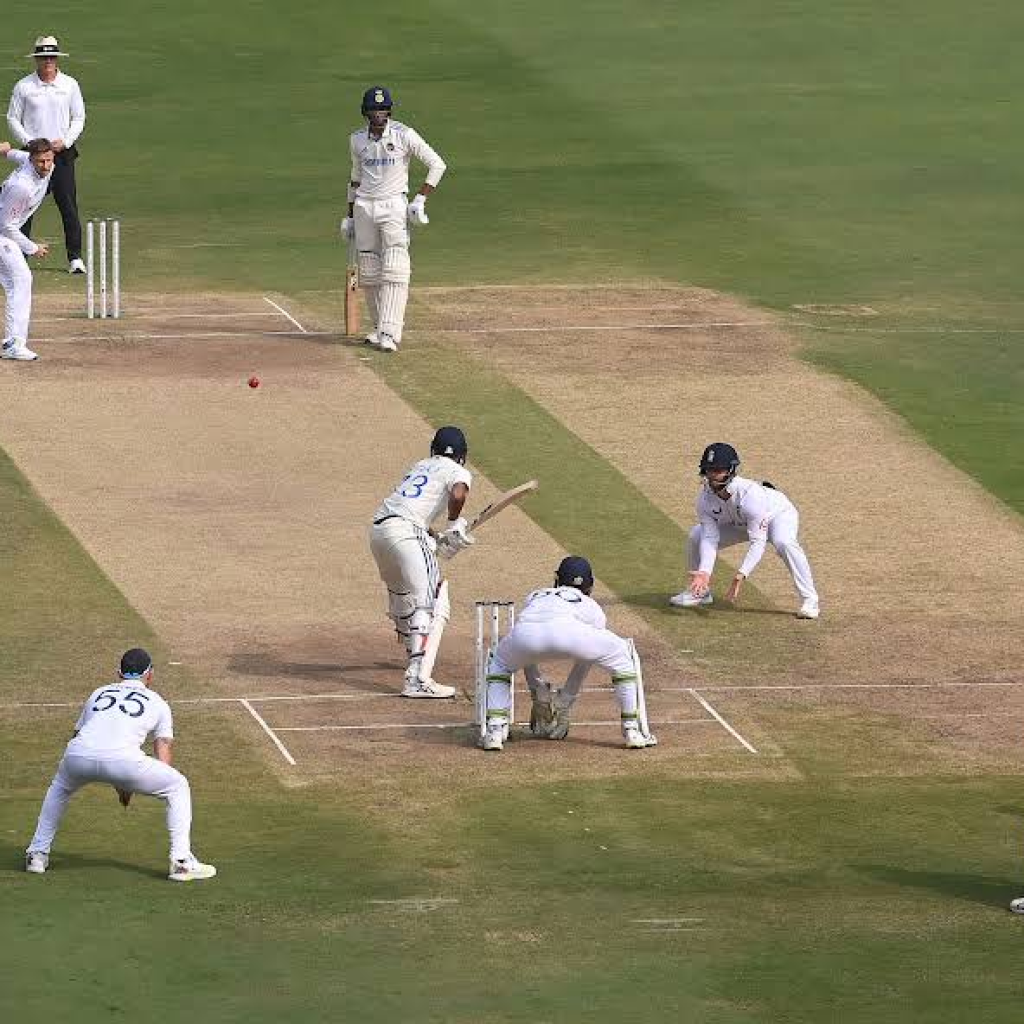
Watch a replay from behind the bowler and divide the delivery into two stages. First follow the flight before the bounce; then examine the path afterwards. Avoid judging from the wicketkeeper’s movement alone, because the keeper responds to the full delivery and may also adjust for its original angle.
In an illustrative sequence, the first ball curves away in the air, the second travels straighter but nips back after pitching, and the third does both. Those are different problems even if all three came from the same bowler. Calling a player a swing bowler does not mean they cannot use seam movement.
The match situation changes the response. In Test cricket, a batter may have time to leave testing deliveries. In T20 cricket, a rising required rate can make the same cautious approach harder to sustain. Those pressures affect shot choice without changing the meaning of swing or seam.
Swing vs Seam Bowling FAQs
These swing vs seam bowling questions cover the distinctions most useful when following a live match. Focus on where the movement happens before deciding what caused a batter’s mistake.
1. Can one ball swing and seam?
Yes. It can change direction during flight and deviate again on contact with the pitch. The two effects describe different stages of the same delivery.
2. Is outswing the same as seam-away movement?
No. Both can take the ball away from a batter, but outswing occurs in the air. Seam-away movement happens after the bounce.
3. Does every fast delivery swing?
No. Pace alone does not guarantee sideways movement. Some deliveries remain relatively straight, and bowlers can threaten batters through accuracy and bounce as well.
4. Is seam bowling the same as spin bowling?
No. Both may produce deviation off the surface, but spin bowling deliberately uses substantial rotation as a central part of the delivery. Seam movement and spin are not interchangeable labels.
5. Which is harder to face: swing or seam?
There is no universal answer. The line, length, amount of movement, conditions and batter’s judgement all matter. A small, well-directed deviation can be more troublesome than a large movement outside the scoring area.