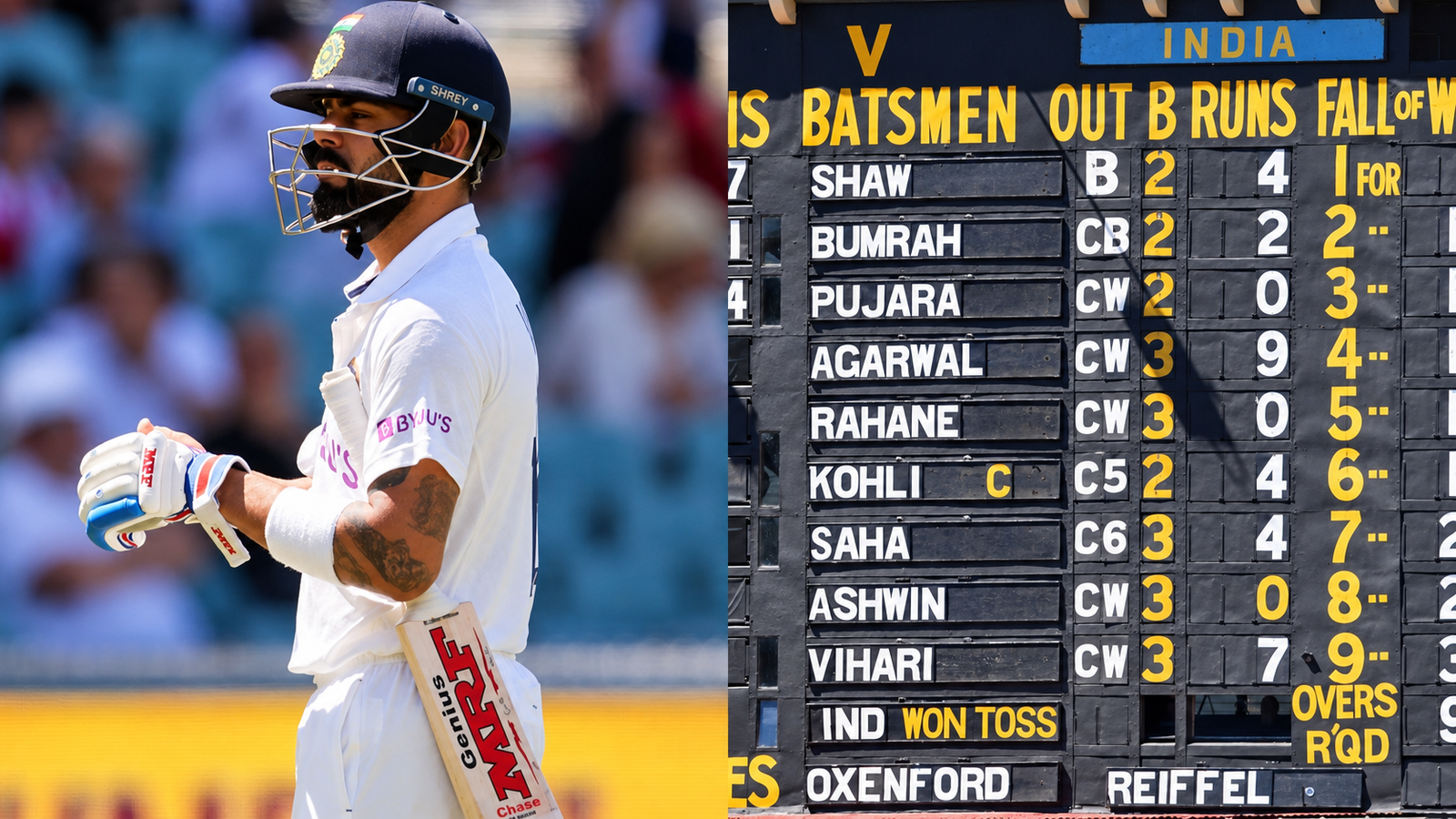
To read a cricket scorecard, start with the innings total, wickets lost and overs completed. Then check the batting card, extras, fall of wickets and bowling figures. Together, these sections show who scored the runs, how wickets fell and how the innings developed.
A score such as 185/6 tells you the team has scored 185 runs and lost six wickets. It does not tell you whether that total is enough. The format, innings number and target provide the context.
This cricket scorecard explained guide uses invented examples. They are separate from the scoreboard shown in the AI-enhanced featured image.
How to Read a Cricket Scorecard: Start With the Match Header
The match header identifies the teams, format, venue, innings and result or live situation. Read it before comparing individual performances.
In a T20 chase, the important question is how many runs are needed from how many balls. In a Test, check whether the side is building a first-innings score, reducing a deficit or chasing a fourth-innings target. Our Test, ODI and T20 comparison explains why the same score can mean different things.
What Do Runs, Wickets and Overs Mean?
A total of 185/6 after 20 overs means 185 runs, six wickets lost and 20 completed overs. In a standard eleven-player side, ten wickets normally end the innings because the remaining batter has no partner.
Overs in cricket use a dot to separate completed overs from valid balls in the next over. 19.3 means 19 overs and three valid balls, not 19.3 decimal overs. That is 117 valid balls, or 19.5 overs for division.
A full over contains six valid deliveries. Wides and no-balls do not count towards those six, so an over can contain more than six deliveries. MCC’s Laws of Cricket set out the scoring and over rules.
Cricket Scorecard Abbreviations in the Batting Card
The batting card records each batter’s runs, balls faced, boundaries and dismissal. Common cricket scorecard abbreviations include:
| Label | Meaning |
|---|---|
| R | Runs credited to the batter |
| B | Balls faced |
| 4s / 6s | Number of fours and sixes |
| SR | Batting strike rate: runs per 100 balls |
| Not out or * | The batter has not been dismissed |
| DNB | Did not bat |
Example: a batter makes 54 from 36 balls, including four fours and two sixes. The strike rate is 54 ÷ 36 × 100 = 150.00. The boundaries are already included in the 54; do not add them again.
Our batting average vs strike rate guide explains how those statistics answer different questions.
How Do You Read Dismissal Notation?
Dismissal notation identifies the method and the players involved. The letter “b” in a dismissal entry identifies the bowler; it does not mean that every dismissal was bowled.
| Entry | Meaning |
|---|---|
| c Rao b Khan | Caught by Rao off Khan’s bowling |
| b Khan | Bowled by Khan |
| lbw b Khan | LBW off Khan’s bowling |
| st Rao b Khan | Stumped by Rao off Khan’s bowling |
| c & b Khan | Khan bowled the delivery and took the catch |
| run out (Rao) | Rao was involved in the run-out dismissal |
A run out increases the team’s wickets lost but is not credited as a wicket to the bowler. “Retired hurt” means a batter left because of injury; it is different from a dismissal.
How Do Extras and Fall of Wickets Fit Into the Total?
Extras are added to the batters’ combined runs to produce the team total. A side whose batters score 173 and whose extras total 12 finishes with 185.
The labels b, lb, w and nb refer to byes, leg byes, wides and no-balls. Penalty runs may appear as p. Read our cricket extras guide for the scoring distinctions.
Fall of wickets, often labelled FOW, records the team total at each dismissal. An entry such as 2-67 (Meera, 8.4) means the second wicket fell at 67, with Meera dismissed after eight overs and four valid balls.
If the first wicket fell at 24 and the second at 67, the second-wicket partnership contributed 43 runs, including any extras during that stand.
How to Read Bowling Figures in Cricket
Bowling figures in cricket commonly appear as overs, maidens, runs conceded and wickets taken: O–M–R–W. Always check the headings because compact displays can use other orders.
4–1–24–3 means four overs, one maiden, 24 runs conceded and three wickets. The economy rate is 24 ÷ 4 = 6.00 runs per over. Separately, 3/24 means three wickets for 24 runs.
A maiden is an over with no runs charged to the bowler. Byes or leg byes can increase the team score without increasing the bowler’s conceded runs.
What Does the Result Line Tell You?
A win by runs normally means the defending team won; a win by wickets means the chasing team reached its target with that many wickets remaining.
For example, defending 185 against a completed reply of 170 produces a 15-run win. Chasing 186 and reaching it with four wickets lost produces a six-wicket win.
Rain-affected results need additional context. Our DLS method guide explains revised targets and par scores. A Test draw is different from a tie, as our Test cricket guide explains.
FAQs About How to Read a Cricket Scorecard
These short answers explain how to read a cricket scorecard, decode cricket scorecard abbreviations and interpret bowling figures without confusing runs, wickets and overs.
1. What does 150/3 mean?
It means the team has scored 150 runs and lost three wickets in that innings.
2. Is 17.4 overs a decimal number?
No. It means 17 overs and four valid balls: 106 valid balls altogether.
3. Are fours and sixes added on top of a batter’s runs?
No. Boundary runs are already included in the batter’s total.
4. What does c & b mean?
It means caught and bowled: the bowler also took the catch.
5. Does a run out count towards the bowler’s wickets?
No. It counts as a team wicket but is not credited to the bowler.
6. Does DNB mean the batter scored zero?
No. DNB means did not bat. A zero score belongs to a batter who took part in the innings.