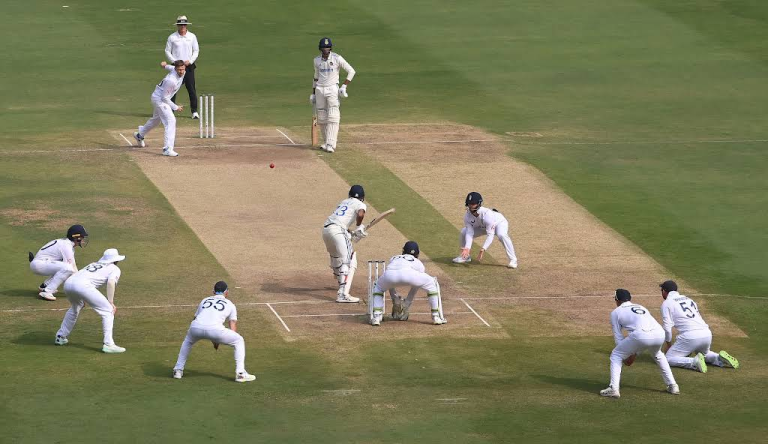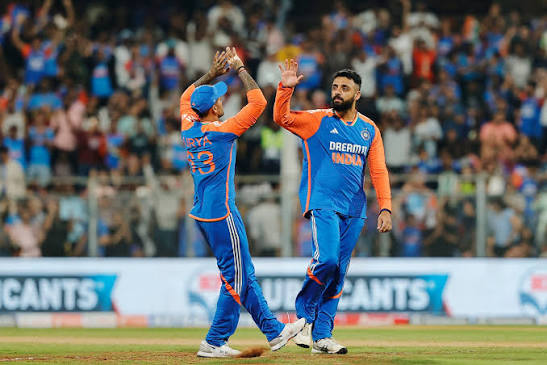

Image credit: ABP Live. This image is not owned by Behind the Stump. Rights belong to the respective copyright owner.
Auckland strengthened the cases of three different bowling roles, not a finished World Cup pace attack. Arshdeep Singh brought wickets, Anshul Kamboj supplied control and Gurnoor Brar offered another wicket-taking option. Their next challenge is repeating those contributions in less helpful circumstances.
This assessment concerns India’s five-wicket DLS win at Eden Park on November 4, 2026. It is not a review of subsequent matches in the series. That distinction matters when judging the India pace attack for the 2027 World Cup: one encouraging result is a starting point, not the final selection meeting.
The New Zealand Cricket archive scorecard records New Zealand’s 185 all out, Arshdeep’s 4/70, Kamboj’s 2/22 and Brar’s 3/44. Kamboj was Player of the Match. Together, the three took nine wickets, with the remaining dismissal a run-out.
1. Arshdeep: Wickets matter, but so does the cost
Arshdeep completed ten overs and took the largest haul of the three. The useful selection question is whether his method can threaten batters across phases while remaining sustainable when wickets do not arrive. Bowling figures should be read alongside the score, conditions and assignment.
A four-wicket return can include expensive overs without becoming a poor performance. Equally, the wickets cannot erase every run conceded. Our bowling average and economy guide explains why those measures answer different questions. For a World Cup role, India need to know which overs a bowler can consistently own.
His left-arm angle gives the attack a different release point. Our assessment is that this variation can be useful, but it should support a selection case built on execution. Variety is an advantage only when the bowler can land the ball where the plan requires.
2. Kamboj: Control can create pressure for everyone
Kamboj delivered his full allocation for just 22 runs. That control is the most striking contrast within the three spells. A bowler who limits easy scoring can allow a captain to persist with attacking fields elsewhere, even when his own wicket column looks less dramatic.
The next test is repeatability. Can he maintain his areas when the pitch offers less assistance, when batters use their feet or when the field spreads? Those questions are more useful than declaring a tournament place secure. The domestic cricket pathway also matters because sustained performances outside an international headline provide a larger evidence base.
The Indian Express described an uncomfortable short-ball examination for New Zealand’s batters. Read its tactical account of the Auckland bowling. That context helps explain the performance, but also warns against assuming the same approach will work on every surface.
3. Brar: A useful option if the bounce remains accurate
Brar’s three wickets added another reason to give him opportunities. Before the series, Gill discussed the value of taller fast bowlers disrupting partnerships in the middle overs, while stressing accurate areas. That role-based thinking is explained in the ICC’s report on India’s World Cup preparation.
Height and bounce offer a method, not an exemption from control. A short ball needs the right length, field and surprise value; repeated predictability can give a set batter a scoring option. Our guide to bowling lengths explains why a bouncer and a hard-length delivery are not interchangeable.
Our early view is to keep testing all three through clearly assigned jobs. Arshdeep’s wicket-taking, Kamboj’s pressure and Brar’s different trajectory are complementary possibilities. Selection should then consider availability, phase coverage and the balance with the rest of India’s bowling, rather than rewarding the loudest single performance.
India pace attack and the 2027 World Cup: FAQs
These answers explain how India’s new-look pace attack performed in Auckland and what Arshdeep, Kamboj and Brar still need to show before the 2027 World Cup.
1. Who impressed in India’s Auckland pace attack?
Arshdeep, Kamboj and Brar all contributed to the November 4 win. Their value came in different forms, which makes a comparison of roles more informative than a simple ranking by wicket count.
2. What were their first-ODI figures?
Arshdeep took 4/70 in ten overs, Kamboj 2/22 in ten and Brar 3/44 in 9.2. Those are the scorecard figures for the Auckland match discussed here, not series totals.
3. Why was Kamboj’s spell significant?
He combined two wickets with an unusually economical full spell. That made him Player of the Match, while the longer-term question is whether he can retain that control against different batting plans and conditions.
4. Does Auckland guarantee a World Cup place?
No. A selection case requires a broader record, fitness and a useful role within the available attack. One match can justify further opportunities without settling a squad that will be picked much later.
5. What role could Brar challenge for?
Our analysis sees him as a candidate for a pace-and-bounce option, particularly through the middle overs. The effectiveness of that role still depends on length, accuracy and how he responds when batters attack.
6. Why not judge only by economy rate?
A bowler asked to attack or bowl difficult overs may concede more while creating vital wickets. Economy needs to be considered with phase, opposition and wicket-taking rather than treated as a complete verdict.
7. Are New Zealand conditions identical to World Cup conditions?
No. Overseas experience can be useful preparation without replicating every venue or surface. India should use the tour to test adaptable skills rather than assume success in one setting transfers automatically.
8. What should selectors watch next?
Repeatable execution on flatter pitches, useful spells with an older ball, fitness and recovery are important. Evidence across those situations would make the case stronger than another isolated headline haul.