Red balls are normally used in daytime Test and first-class cricket, white balls in ODIs and T20s, and pink balls in day-night Tests. The main reason cricket uses different balls is visibility: the ball must stand out against the lighting, clothing and background. Surface finish and wear can also affect how it behaves.
A Test match under floodlights asks a different question from a daytime Test. Players need to follow the ball after sunset while still playing in white clothing. That is where the pink ball comes in.
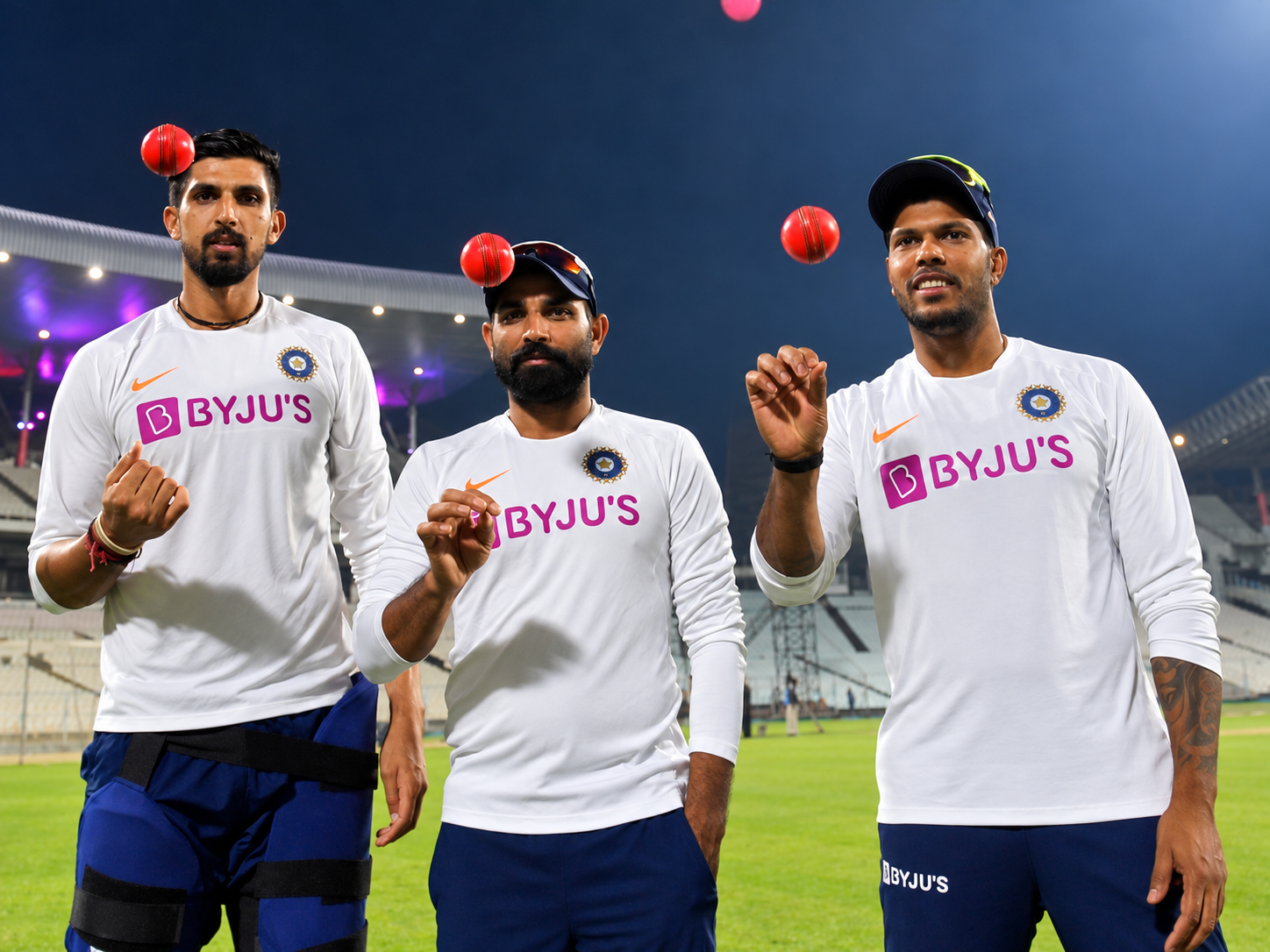
This pink ball vs red ball vs white ball guide explains the differences with simple examples. The enhanced featured photo shows players practising with cricket balls; it is not a side-by-side comparison of all three colours.
Pink Ball vs Red Ball vs White Ball: Quick Comparison
The easiest way to compare cricket ball colours is by their usual match format and visibility requirements. Colour alone does not tell you exactly how much a ball will swing or bounce.
| Ball | Usual use | Main visibility purpose |
|---|---|---|
| Red ball | Daytime Tests and first-class matches | Contrast in daylight, usually with white clothing |
| White ball | ODIs and T20s, including day-night games | A bright ball against coloured clothing and a dark sightscreen |
| Pink ball | Day-night Tests | Visibility across daylight, twilight and floodlights with white clothing |
These are the normal international uses. Competition playing conditions determine the approved ball. The ICC’s current ODI rules and T20I rules specify approved white balls.
Why Is a Red Ball Used in Test Cricket?
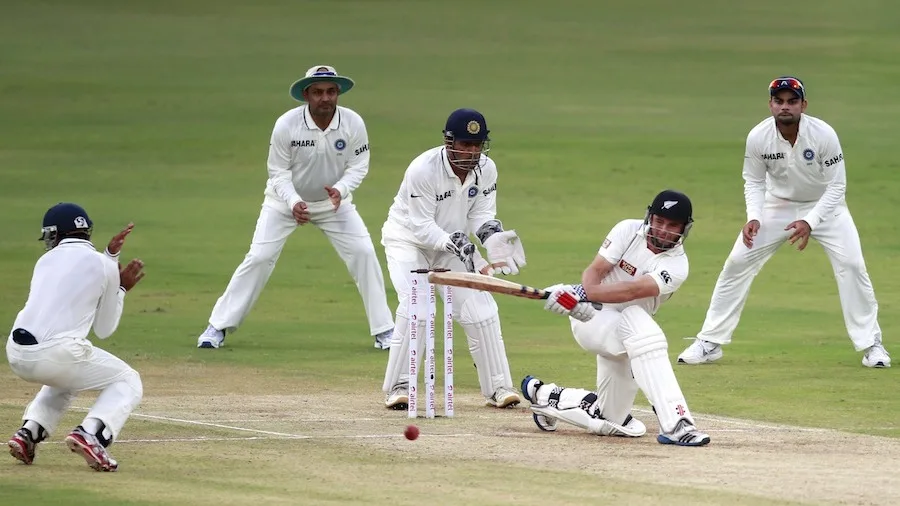
The red ball is the traditional choice for daytime Test cricket, where it provides a visible contrast against white kits and the usual white sightscreen. It is used over long periods, with its condition changing as the innings develops.
That changing condition matters. A new ball and an older ball can present different challenges, but the brand, seam, pitch and bowling technique all play a part. A red ball is not automatically a guarantee of swing.
Red-ball cricket is often used as shorthand for the longer formats. For the match structure behind the term, read our Test cricket guide.
Why Is a White Ball Used in ODI and T20 Cricket?
White balls suit limited-overs cricket because they are easier to pick out under floodlights and against coloured clothing. White-ball games normally use a dark sightscreen to give batters a contrasting background.
The white surface makes dirt and grass marks easy to notice. A worn ball may therefore present a different visual challenge from a new one. However, its colour does not change the sport’s basic scoring or dismissal rules.
Do not assume white-ball cricket always means a night match. Daytime ODIs and T20s also use white balls. The match format and its playing conditions decide the ball, rather than the clock alone.
Why Is a Pink Ball Used in Day-Night Tests?
Pink balls allow Test cricket to continue under floodlights while players retain white clothing. They address a visibility problem that a traditional red ball presents as natural light fades.
Pink-ball cricket still uses the Test format. It does not become a limited-overs match because the ball changes colour. The first day-night Test was Australia against New Zealand at Adelaide in November 2015, following pink-ball trials. See the ICC’s announcement of the inaugural match.
Pink-ball design has evolved. Cricket Australia reported changes aimed at making the seam easier to see, including work on a black seam. That is a useful reminder that visibility depends on the ball’s design as well as its colour. Cricket Australia’s development report explains those concerns.
Does the Pink Ball Always Swing More?
No. There is no reliable rule that the pink ball always swings more than the red or white ball. Swing depends on airflow around the ball, including seam orientation, speed and surface condition.
The finish applied to a ball and how it wears can influence those surface conditions. But comparing colours without considering the manufacturer and ball model can be misleading. Research on cricket-ball aerodynamics explains why seam and surface properties matter.
Swing happens in the air; seam movement happens after the ball pitches. Read our swing vs seam bowling guide to understand the distinction.
Is the Pink Ball Harder to See at Twilight?
Twilight can be a challenging transition, but visibility varies with the background, lighting and condition of the ball. A ball that looks clear against one part of the ground may be harder to track against another.
That is why “pink is always easy to see” is too simple. Cricket Australia’s development work considered player feedback about seam visibility and the ball’s appearance at different times. Better night visibility does not mean identical visibility in every direction.
Red Ball vs White Ball vs Pink Ball: A Simple Example
Imagine the same stadium hosting three matches. A daytime Test normally uses a red ball. A floodlit ODI uses a white ball with coloured kits. A day-night Test uses a pink ball while keeping the white kits and Test format.
The pink ball is not made by mixing a red ball and a white ball. It is a separately finished cricket ball. And choosing a colour does not let organisers ignore the competition’s approved-ball requirements.
The practical lesson is to look at the whole match: format, lighting, clothing, background and ball condition. A change of colour is one part of that picture.
FAQs About Pink Ball vs Red Ball vs White Ball
These pink ball vs red ball vs white ball FAQs answer common questions about cricket ball colours, match formats and visibility.
1. What is the main difference between red, white and pink cricket balls?
Their usual match use and visibility requirements differ. Red balls are normally used for daytime Tests, white balls for ODIs and T20s, and pink balls for day-night Tests. Finish and wear also matter.
2. Why not use a white ball in a day-night Test?
White balls can be harder to distinguish against white Test clothing. Pink provides a different contrast while allowing the match to retain its traditional white kits.
3. Are pink-ball matches still Test cricket?
Yes. A day-night Test remains a Test match. The ball colour and session timing differ, but it does not become an ODI or T20.
4. Does a pink ball always swing more?
No. Seam position, speed, surface condition and the ball model affect swing. Colour alone cannot predict how much movement a delivery will produce.
5. Can a white ball be used during the day?
Yes. Daytime ODIs and T20s use white balls too. White-ball cricket describes the usual equipment and formats, not only matches played at night.
6. Is a pink ball a mixture of red and white balls?
No. A pink cricket ball is manufactured and finished as its own product. It is not created by combining two finished balls.