
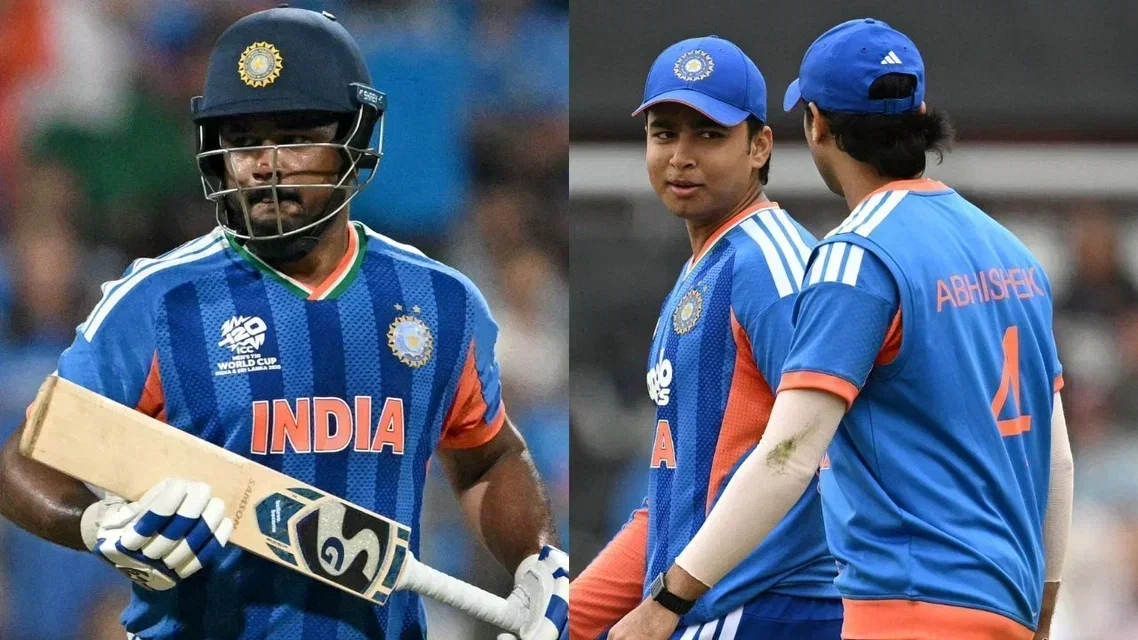
Specific bowling plans, the demands of opening and competition for places have complicated Samson’s position despite his World Cup success.
Sanju Samson’s position in India’s T20I side has returned to the spotlight, with the discussion extending beyond a few disappointing scores. The wicketkeeper-batter has already demonstrated his ability to win important games, but translating those performances into a settled role remains a different challenge.
Earlier in 2026, Samson produced an unbeaten 97 against West Indies before scoring 89 in both the semifinal against England and the final against New Zealand. Those contributions earned him the T20 World Cup Player of the Tournament award. That record makes it difficult to judge his value purely through his more recent setbacks.
The questions now concern how he responds when bowlers deny him his preferred scoring options, what India expects from him at the top of the order and where he fits as other contenders emerge. His ability is established; finding a combination that brings out that ability more regularly is the task facing both Samson and the team management.
Here are three factors behind the debate over Sanju Samson’s T20I place:
1. Competition has made the selection equation more complicated
The emergence of Vaibhav Sooryavanshi has added another option to India’s top-order discussion. Samson is therefore competing for a role within a changing batting combination, rather than simply trying to prove that he can score runs. Our earlier analysis of the selection questions around Vaibhav’s debut explored why introducing another attacking batter creates decisions elsewhere in the side.
Dinesh Karthik also raised the issue of where Samson fits alongside the younger opener. According to The Indian Express report published on September 13, Samson was left out during the England series before returning for the fifth T20I, and was subsequently absent from the Zimbabwe squad. Those changes underline the uncertainty surrounding his position.
The selection question is not settled by comparing two players’ most impressive innings. India must consider opening partnerships, wicketkeeping and the effect of moving a batter down the order. Samson’s World Cup contributions deserve weight in that assessment, but the management also needs a clear view of how he complements the players around him. A defined role would make it easier to assess his performances fairly.
2. An attacking opening role requires clarity as well as freedom
Opening in T20 cricket offers the chance to exploit fielding restrictions, but it also exposes a batter to fresh fast bowlers and the new ball. An aggressive approach will produce some early dismissals. The important distinction is between an acceptable risk taken to help the team and a repeated decision that allows the opposition to control the contest.
For Samson, maintaining intent does not have to mean attempting a boundary from every delivery. A single against a difficult ball can change the matchup, while recognising which bowler to target can make an attacking innings more effective. These contributions are less noticeable than a six, but they help a batter remain productive when his preferred shots are unavailable.
Clear communication from the team matters just as much. Samson should know whether the main expectation is immediate powerplay acceleration or greater flexibility according to the match situation. Selection uncertainty could complicate those decisions, although it would be speculative to claim we know his thoughts at the crease. This is part of the broader discussion around India’s T20I batting combination under Shreyas Iyer.
A sustained opportunity at No. 3 is one option worth considering, rather than a guaranteed solution. It could allow him to assess conditions before entering, but an early wicket would still expose him to the new ball. Any move also affects another batter. The priority should be a role that improves the whole order and gives Samson clear responsibilities, wherever he bats.
3. Opponents have used specific plans to restrict his scoring
The most direct batting concern is how Samson reacts when pace bowlers take away room. A January analysis published by Rediff described England attacking him with short, fast deliveries into the body, while New Zealand’s seamers used straighter lines to limit his off-side hitting. Those observations relate to those series and should not be treated as an explanation for every later dismissal.
Both approaches reduce the freedom to extend his arms through the shot. A ball directed towards the body can rush the pull, while a straight delivery can make an attempted off-side boundary more difficult. The challenge is choosing a response suited to the delivery instead of committing to a favourite scoring option too early.
Samson’s response need not be to abandon his attacking game. He can look for controlled scoring alternatives, avoid forcing an unsuitable shot and make the bowler adjust. These are tactical possibilities, not a claim that a single technical change will fix his batting. The evidence to watch is whether he responds differently when the same plan is used again.
His World Cup innings show the value of preserving the qualities that make him dangerous. The next step is producing useful contributions when conditions are less favourable and reducing dismissals that follow a familiar pattern. Better decisions against restrictive bowling, supported by a clear team role, would give Samson a stronger basis for turning his best performances into a more dependable run.


One Comment
Comments are closed.