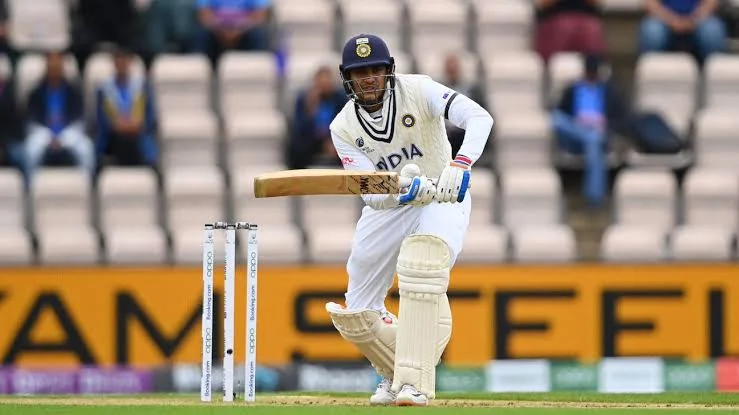

Image credit: cricinfo.
India WTC final qualification remains possible, with six or seven wins from their last seven Tests providing their strongest routes to a top-two finish. Neither result is an unconditional guarantee: the final standings also depend on other teams.
India have ground to recover, but their remaining opponents make the race particularly interesting. Two away Tests against New Zealand and five home Tests against Australia offer opportunities to earn points while denying them to direct rivals. The immediate challenge is to avoid leaving too much work for the final series.
India WTC final qualification: Current points and position
The official ICC WTC standings show India fourth with 68 points from 11 Tests and a points percentage of 51.52%. New Zealand lead on 72.22%, followed by South Africa on 71.43% and Australia on 69.23%. Only the top two progress to the final.
These figures are championship points percentages, not predictions. India must overtake at least two teams currently above them and finish ahead of other challengers. The separate ICC rankings and team ratings do not decide qualification for this final.
How many WTC matches do India have left?
India have seven Tests left: two away against New Zealand and five at home against Australia. The ICC review of the remaining WTC assignments confirms those two series. Together, they offer India another 84 points.
A series victory has no separate points bonus. Winning a five-Test series 3–2 earns fewer championship points than winning it 4–1, even though both results secure the trophy. For India, the individual match results are therefore central to the qualification equation.
How many wins do India need for the WTC final?
Six wins are a practical target for a stronger challenge; seven wins produce India’s maximum possible finish. This is an assessment of the available routes, not a claim that six is a proven mathematical minimum.
As our guide to the World Test Championship points system explains, each win earns 12 points, a draw four and a tie six. India are scheduled to complete 18 Tests, making 216 points the denominator for their final percentage.
| Remaining results | Final points | Final PCT |
|---|---|---|
| 7 wins | 152 | 70.37% |
| 6 wins, 1 draw | 144 | 66.67% |
| 6 wins, 1 loss | 140 | 64.81% |
| 5 wins, 2 draws | 136 | 62.96% |
| 5 wins, 1 draw, 1 loss | 132 | 61.11% |
| 5 wins, 2 losses | 128 | 59.26% |
These are independently calculated finishing percentages, not qualification probabilities. For example, six wins and one defeat would add 72 points to India’s existing 68. The calculation is 140 ÷ 216 × 100 = 64.81%. A draw instead of that defeat lifts the finish to 66.67%.
The broad need for a strong finish is also reflected in Cricbuzz’s WTC qualification scenario analysis. India’s final position will depend on the distribution of results across the competition, rather than a fixed qualifying percentage.
Why the New Zealand series is crucial
A 2–0 win in New Zealand would leave India needing four victories against Australia to reach six wins overall. If the New Zealand series ends 1–1, India would need a 5–0 home sweep to reach that same six-win total. Losing both away Tests would limit their best finish to five victories and a PCT of 59.26%.
A 1–0 win with one draw in New Zealand, followed by a 5–0 victory over Australia, would deliver 66.67%. These examples explain why a series scoreline matters more than simply saying India must win both series. Our guide to Test cricket rules and drawn matches explains how a game can end without a winner. A narrow series victory may leave too many points uncollected.
Would seven wins guarantee India a final place?
No. Seven wins would take India to 70.37%, but two other teams could still finish higher. New Zealand, for example, could lose both Tests against India and win their other eight remaining matches. Starting from 52 points, that hypothetical run would leave them on 148 points from 16 Tests, or 77.08%. South Africa could also exceed India’s maximum.
That example illustrates a mathematical possibility, not a prediction. It also shows why today’s second-place PCT is not a permanent qualification target. The leading teams still have matches to play, and the final cutoff will change with their results.
What is India’s probability of qualifying?
A credible numerical probability requires a forecasting model with assumptions about team strength, venues and draws for every remaining fixture. This article does not assign an unsupported percentage. India’s 51.52% PCT measures points earned, not their chance of reaching the final.
The practical reading is that India remain contenders but face a demanding finish. Six wins, preferably with a draw, would improve their position substantially. All seven victories would maximise their points total. With fewer victories, they would require more favourable results elsewhere. Additional slow over-rate deductions would reduce every projected finish in the table.
India WTC final qualification FAQs
These India WTC final qualification FAQs explain the remaining matches, six-win scenarios and the difference between WTC points percentage and qualification probability.
1. Can India still qualify for the WTC final 2027?
Yes. India remain in contention, but need a strong finish and favourable results elsewhere. Their highest possible final PCT is 70.37%, assuming seven wins and no additional deductions.
2. How many matches do India need to win?
Six or seven wins provide their strongest routes from the seven remaining Tests. There is no unconditional win-count guarantee, and six is a practical target rather than an established mathematical minimum.
3. Who are India’s remaining WTC opponents?
India have two Tests away against New Zealand and five at home against Australia, making seven remaining matches in the league stage.
4. What happens if India win six Tests and lose one?
India would finish with 140 points from 216 available, producing a PCT of 64.81%. Qualification would still depend on other results.
5. Can India qualify with five wins?
Five wins cannot be treated as automatic elimination or automatic qualification. Their PCT would range from 59.26% with two losses to 62.96% with two draws, before new deductions. Other teams’ results would decide whether that is enough.
6. Is India’s WTC PCT the same as their qualification probability?
No. PCT is the percentage of available championship points earned. Qualification probability is a forecast that requires a separate model and explicit assumptions.
7. Do slow over-rate penalties affect these scenarios?
Yes. Points deductions reduce the points earned without reducing the available-points denominator. The projections above assume India receive no further deductions.