Image credit – BCCI
India A vs Pakistan A ended in a 48-run defeat for India in the Rising Stars Asia Cup on 22 November 2026. Three connected problems explain the result: conceding 313, losing too many wickets during the chase, and failing to score quickly enough while rebuilding. Tilak Varma’s century kept the innings alive, but India finished well short of the target.
Pakistan Shaheens won the Group B match at the West End Park International Cricket Stadium in Doha. India were chasing 314 in this 50-over contest, with the BCCI’s official match centre confirming the final totals and winning margin.
The defeat deserves a team-level assessment. A century can be valuable without being fast enough for a particular chase, and an expensive bowling innings can increase the pressure without making the target impossible. The following analysis separates those issues rather than reducing the result to one player.
India A vs Pakistan A: Match result at a glance
| Team | Score | Overs |
|---|---|---|
| Pakistan Shaheens | 313 all out | 49.2 |
| India A | 265 all out | 49.1 |
| Result | Pakistan Shaheens won by 48 runs | Target: 314 |
For readers checking innings notation, our guide to reading a cricket scorecard explains how runs, wickets and completed overs fit together. India’s innings lasted almost the full allocation, but using most of the overs did not mean the chase was under control.
1. India could not keep Pakistan’s total below 300
Hasan Nawaz made 79, Maaz Sadaqat scored 59 and Farhan Yousaf added 56. Those contributions gave Pakistan more than one substantial innings to build around. The PCB’s match report records the three half-centuries and Hasan’s all-round contribution.
India eventually took all ten wickets, but Pakistan had already reached a demanding total. That distinction matters: bowling a team out is only one measure of an effective limited-overs innings. The runs conceded before those wickets arrive determine the job left for the batters.
A target of 314 required 6.28 runs per over from the start. It left India needing regular scoring partnerships, with limited room for long periods of consolidation. This does not prove the target was beyond reach. It explains why a batting collapse and a slow recovery would be particularly costly.
The lesson is to judge bowling through both wickets and control. India needed to interrupt Pakistan’s scoring often enough to reduce the chase, rather than rely on eventually finishing the innings. Our explanation of fielding restrictions in ODI and T20 cricket provides useful context for how the scoring challenge changes across a limited-overs innings.
2. The collapse to 129/6 left too much to the recovery pair
Abhishek Sharma’s 70 from 42 balls provided attacking momentum, but India slipped to 129/6. Tilak and Shahbaz Ahmed then added 112 for the seventh wicket. As the Times of India match coverage details, the recovery did not prevent another burst of wickets from deciding the contest.
At six wickets down, the remaining batters face competing demands. They must protect the innings while continuing to chase a large total. Every additional dismissal reduces the freedom to attack because there are fewer recognised batting partners available.
The seventh-wicket stand repaired the score, but it could not undo the earlier loss of batting resources. India needed more support around their major contributors so that rebuilding did not become the responsibility of one partnership. That is a broader batting failure than simply pointing to the final wicket.
3. Tilak’s hundred did not solve the scoring-rate problem
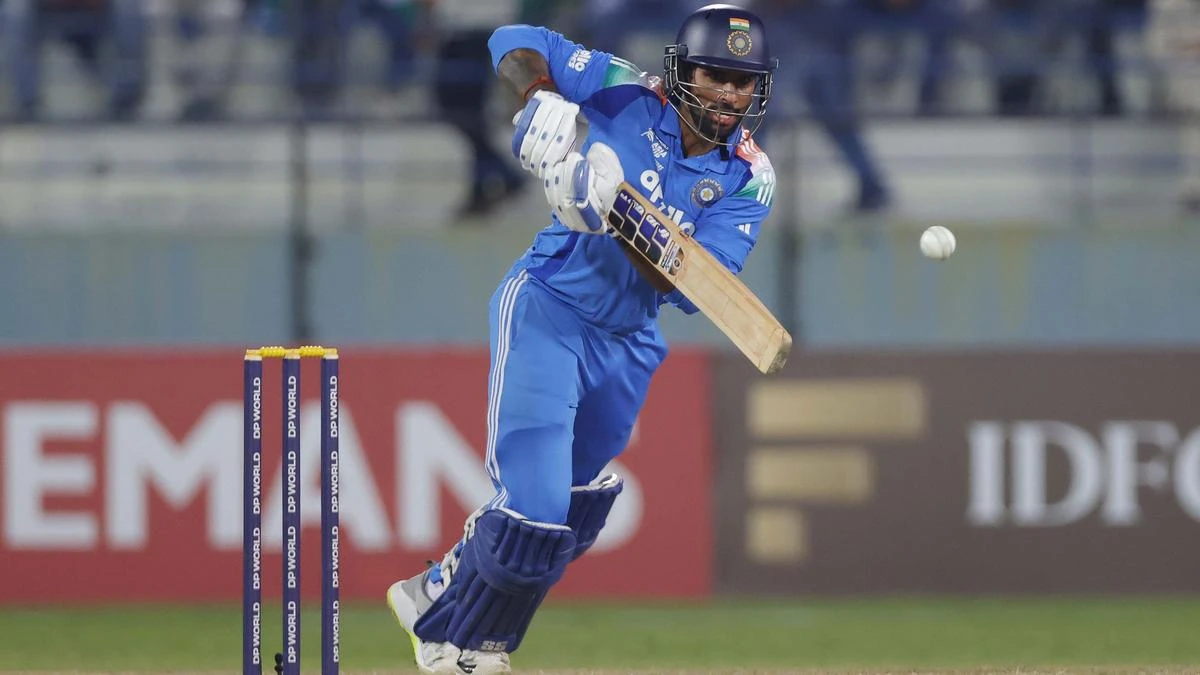
Tilak finished with 100 from 149 balls, while Shahbaz scored 56 from 49. The captain’s strike rate was approximately 67.11. His innings prevented an earlier collapse, but the pace of scoring remained a fair part of the post-match assessment.
A chase requires both survival and progress towards the target. Tilak occupied close to half of the available 300 legal deliveries. That made acceleration elsewhere especially important, particularly once wickets had removed several possible partners. Our guide to batting average versus strike rate explains why an innings’ size and its speed answer different questions.
Pakistan also earned credit for sustaining that pressure. Hasan took 3/45 and Ali Raza 3/56, while Ahmed Daniyal conceded 40 in 9.1 overs. Their control meant India could not assume a late surge would follow simply because a set batter remained at the crease.
The fair conclusion is that India’s recovery lacked the combination of wickets in hand and scoring speed needed to finish the chase. Criticising the tempo is reasonable; claiming a player deliberately prioritised a milestone would require evidence that the scorecard cannot provide.
India A vs Pakistan A FAQs
These India A vs Pakistan A FAQs cover the Rising Stars Asia Cup result, the main batting performances and the reasons India’s chase fell short.
1. Who won the India A vs Pakistan A match?
Pakistan Shaheens won by 48 runs in Doha on 22 November 2026.
2. What were the final scores?
Pakistan made 313 all out in 49.2 overs. India were dismissed for 265 in 49.1 overs, chasing 314.
3. What were the main reasons India A lost?
Pakistan built a substantial total, India fell to 129/6, and the recovery did not produce enough runs quickly enough to complete the chase.
4. How much did Tilak Varma score?
Tilak scored 100 from 149 balls. It was a substantial innings, but its scoring rate was an important limitation in this chase.
5. Who supported Tilak during the chase?
Abhishek made 70 and Shahbaz scored 56. Tilak and Shahbaz shared a 112-run seventh-wicket partnership.
6. Was this a senior men’s Asia Cup match?
This was a 50-over Rising Stars Asia Cup fixture between India A and Pakistan Shaheens, also commonly called Pakistan A.