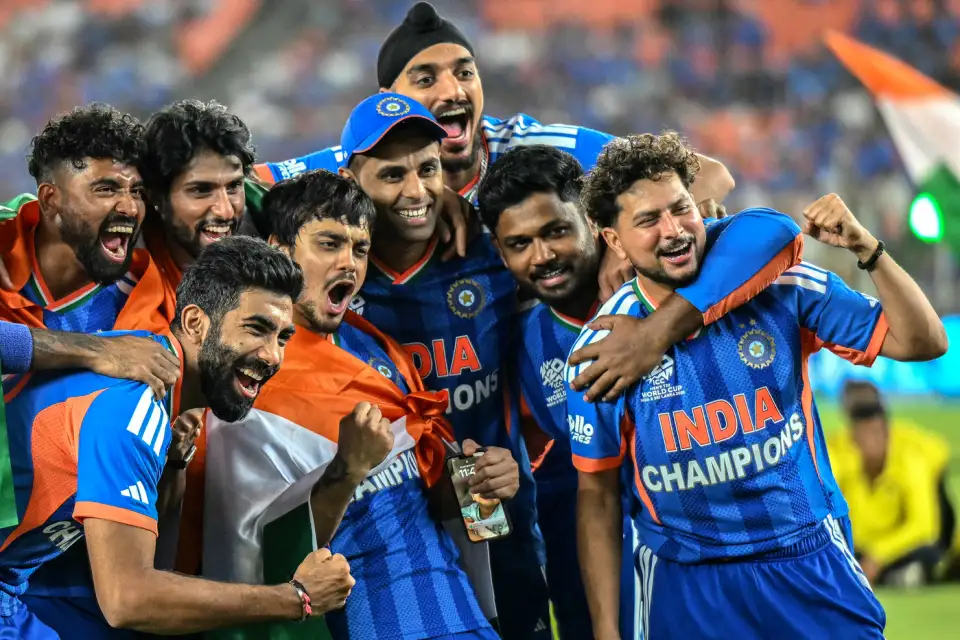
T20, short for Twenty20, is cricket played with one innings of up to 20 overs per team in a full-length match. It gives a batting side 120 valid deliveries to make its score, so the pressure to use those deliveries well begins early.
It is one of the formats introduced in our beginner’s overview of cricket formats.
How does a T20 match work?
One side bats first and sets a total; the other chases a target one run higher. An innings can end early if the team is all out or, for the chasing side, if the target is reached. Interruptions can reduce the overs.
For an invented example, Team A scores 170. Team B needs 171 from 120 valid balls. If Team B reaches 100 after 12 overs, it needs 71 from the remaining eight overs. A quick partnership can reduce that pressure, while a quiet over pushes it higher.
What is the difference between T20 and T20I?
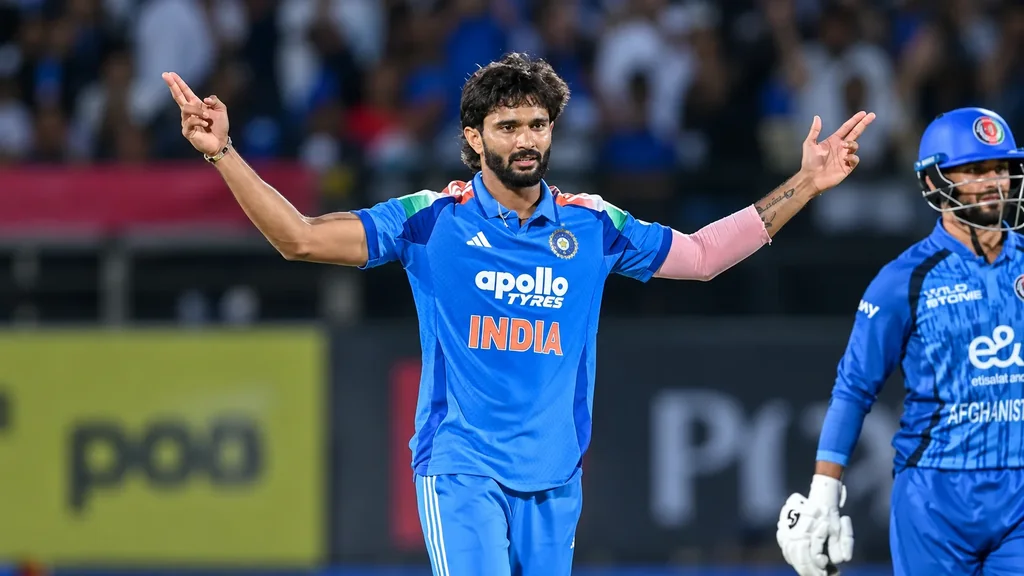
T20 names the format. T20I means Twenty20 International, a match played between international sides with the relevant status. The IPL uses the T20 format, but an IPL fixture is not a T20I.
This distinction also matters when reading player statistics. A player’s overall T20 record can include franchise and domestic matches as well as internationals; a T20I record covers only the international subset.
For the comparison table and examples of player records, read our difference between T20 and T20I guide.
What is the powerplay?
In a full-length standard T20 international, the first six overs are the powerplay. Only two fielders may be outside the fielding circle during this period. After it, the normal maximum is five, subject to the applicable playing conditions and penalties.
Those restrictions influence a batter’s options. Fewer boundary riders may encourage an aerial shot, but attacking a moving new ball still carries risk. A fielding restriction creates an opportunity, not a guarantee of easy runs.
Why are the final overs so important?
Commentators call the closing stage the death overs, often meaning the final four or five overs of a T20 innings. It is a tactical description, not a separate formal innings.
A batter with only twelve balls remaining may accept risks that would have looked unnecessary earlier. Bowlers respond by trying to deny comfortable hitting options. A good over can be one that prevents boundaries, even without taking a wicket.
Each bowler normally has a maximum of four overs in a full T20 innings. A captain must decide when those overs will have the greatest effect.
Is T20 only about hitting sixes?
No. Consider two batters who each face three deliveries without a boundary. One scores no runs; the other finds three singles. Those singles keep the chase moving and change who faces the next delivery. Fielding, running and shot selection remain important.
Read Test vs ODI vs T20 for more examples of changing match pressure, or explore ODI cricket to see how a longer limited-overs innings works.
T20 cricket FAQs
1. What does T20 stand for?
T20 is short for Twenty20. In a full match, each team has one innings of up to 20 overs, with six valid deliveries in an over.
2. What does a one-off T20 mean?
A one-off T20 is a standalone Twenty20 match rather than a series of several T20 fixtures. “One-off” describes the number of matches, not a different format or a one-over innings. A one-off T20I is an international match with the relevant official status.
3. How do T20 fielding restrictions work?
In a full standard T20I, the opening six overs normally permit only two fielders outside the circle; after that, the usual maximum is five. See our powerplay and fielding restrictions guide for the scope, exceptions and comparison with ODIs.
Rules reference: ICC playing conditions. Examples in this guide are illustrative; competition-specific conditions and reduced-over matches can differ.