Image credit: India TV. This image is not owned by Behind the Stump. Rights belong to the respective copyright owner.
India’s floating middle order makes sense if the players know the conditions for moving up or down. Flexibility becomes a problem when the reason for a change is unclear or when a batter is repeatedly judged outside the job he was prepared to perform.
Before the New Zealand ODI series, Gill outlined a flexible approach to No. 5 and No. 6. This article analyses that November 3 explanation, using reporting checked on November 5. It does not assume that subsequent matches have already proved the policy right or wrong.
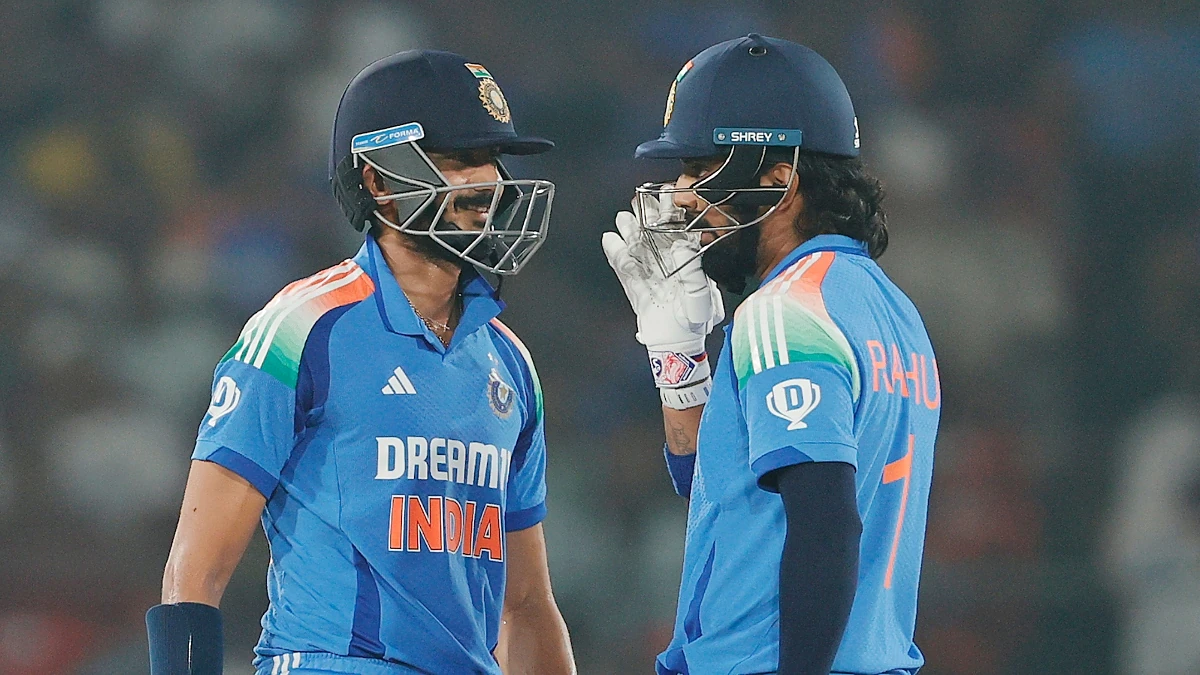
Gill identified Axar Patel’s left-handed option and KL Rahul’s situational role as part of the thinking. The ICC report on Gill’s middle-order approach provides the original context. A floating position changes the entry point; it need not mean a player has no defined responsibility.
1. Why moving No. 5 and No. 6 can make sense
Imagine India lose their fourth wicket with spin operating and many overs remaining. Promoting a left-hander could change a bowler’s preferred angle and the captain’s field. In a different match, early wickets might call for a batter who can rebuild. These are illustrative scenarios, not announced automatic rules for the team.
The decision should consider the individual’s scoring options as well as which hand he bats with. A left-right combination is useful only if both players can handle the bowling in front of them. A change made purely for symmetry can become a shortcut that ignores the actual contest.
One historic example of different middle-order contributions is the 2025 Champions Trophy final. Axar made 29 and Rahul finished unbeaten on 34 in India’s chase. The ICC’s final report records those contributions. That result supports discussing complementary jobs, not declaring one batting order permanently correct.
2. Where flexibility turns into uncertainty
The risk arrives when a player cannot anticipate either his likely entry point or his expected tempo. Moving between rebuilding and finishing asks for preparation against different bowling and field settings. Coaches should explain those possibilities before the match rather than leave every change to an improvised dressing-room message.
Selection consistency and positional consistency are also different things. A player can retain a clear place in the team while changing positions, provided the reasons are understood. Conversely, always batting fifth does not create clarity if the expected approach changes without explanation. Our batting average and strike-rate guide shows why numbers must be interpreted against the task.
Squad availability adds another layer. The BCCI’s original New Zealand tour squad announcement named separate ODI groups for the early and later matches. A policy therefore needs to work with the selected players, not a hypothetical ideal XI that is always available.
3. What a clear World Cup plan should look like
Our preferred approach is a small set of understood triggers: overs remaining, wickets lost, bowling type and the required scoring rate. Each batter should know the situations in which he is most likely to be promoted, along with the alternative if another wicket falls immediately. This is our proposed framework, not a statement of India’s internal instructions.
Consider a chase that requires six an over with plenty of time left. Maintaining scoring options may matter more than chasing a boundary immediately. If the same innings reaches a demanding final-ten-over equation, the risk calculation changes. Our required versus current run-rate explainer gives a simple way to follow that pressure.
All-rounder availability can also affect the surrounding batting depth. Our earlier assessment of Nitish Kumar Reddy’s return after injury setbacks explores why role and fitness cannot be separated. The middle order should be assessed as part of that wider balance.
Our verdict is conditional approval. Keep the flexibility, but attach it to communicated roles and a fair way to assess performance. If a promotion succeeds, credit the decision and execution separately. If it fails, examine the reasoning instead of treating every dismissal as proof that the entire policy is confused.
India’s floating middle order: FAQs
These answers explain India’s floating middle order, the possible roles of Axar and Rahul, and how flexibility can coexist with clear expectations.
1. What is India’s floating middle order?
It means players can exchange batting positions according to the situation rather than always enter at the same wicket. The current discussion concerns No. 5 and No. 6, not a claim that every position is interchangeable.
2. Why might Axar be promoted?
His left-handedness can offer a different option against the bowling and field in use. Whether a promotion is sensible also depends on his scoring strengths and the match situation, rather than handedness alone.
3. Does this mean Rahul has lost a fixed team role?
Not necessarily. A team role can remain clear even if the batting number changes. The relevant question is whether he knows the situations he is being prepared for and receives enough opportunities to perform them.
4. Is a left-right partnership always better?
No. It may complicate a bowler’s plans, but individual match-ups and batting quality matter more than appearance. Promoting someone solely to alternate hands can be counterproductive if the bowling does not suit his game.
5. How should coaches prevent confusion?
They should explain likely scenarios, promotion triggers and the expected tempo before play. Players also need a shared understanding of how the plan changes after another wicket or a sudden rise in the required rate.
6. What does the 2025 final tell us?
It shows that Axar and Rahul contributed differently within a successful chase. It does not prove that repeating the same order in every match is the best choice; the bowling, target and stage of the innings can change.
7. How should middle-order performances be judged?
Consider the entry point, balls available, wickets remaining and scoring requirement. A raw average or strike rate across very different assignments may hide whether the player actually carried out the job asked of him.
8. Is flexibility the right World Cup strategy?
Our view is that it can be, provided the group has rehearsed the options. A smaller number of clear, repeatable adjustments is preferable to frequent changes that the players cannot anticipate or practise.