Rinku Singh’s career has reached a strange point. His reputation was built on doing the hardest job in T20 cricket—walking in late, reading the situation immediately and finishing an innings—but the same role now makes him unusually easy to leave out. A few quiet cameos can look like a loss of form even when the sample is tiny.
The simple answer to “what went wrong?” is that several things happened at once: India’s middle order became crowded, his role kept changing, and the opportunities became irregular. His recent numbers, however, suggest the player has not disappeared.
Rinku Singh’s recent numbers
| Competition | Performance | What it shows |
|---|---|---|
| UP T20 League 2026 | 241 runs in 9 innings; average 40.17; strike rate 169.72 | Power and consistency while captaining Meerut Mavericks |
| IPL 2026 | 295 runs in 11 innings; average 59.00; strike rate 148.99 | A strong rebound for Kolkata Knight Riders |
| Duleep Trophy 2026 | 60 and 20 in the semifinal against East Zone | Technique and temperament beyond white-ball cricket |
| T20I career | 665 runs in 33 innings; average 39.11; strike rate 155.73 | Elite career output for a lower-order batter |
Those figures do not describe a batter whose game has collapsed. They describe one whose international role has become less secure than his performances elsewhere.
The UP T20 scores show the hitting is still there
Rinku’s nine scores for Meerut Mavericks were 28 off 21, 25 off 12, 55 off 24, 2 off 3, 29 off 7, 30 off 10, 34 off 40, 37 off 23 and 1 off 2. The sequence contained two failures and one slower innings, but also several explosive contributions.
He finished the tournament with 241 runs at a strike rate of 169.72 and led Meerut to the title. The UP T20 League scorecards underline an important point: when Rinku receives enough balls and a defined responsibility, he can still influence matches regularly rather than merely produce the occasional highlight.
IPL 2026 was a recovery, not another decline
The previous two IPL seasons had changed the conversation around him. After his breakthrough campaign, KKR’s deep batting order often left him with short, awkward entries. A finisher may face eight balls one night, sit through a top-order chase the next and then be expected to rescue a collapse. That is not a rhythm-friendly job.
IPL 2026 offered a clearer response: 295 runs from 11 innings at an average of 59 and a strike rate of 148.99, including an unbeaten 83. His updated IPL and career statistics show both the rebound and the larger body of work.
That does not mean every concern vanished. India’s finishers are expected to score at extreme speed from ball one, and Rinku’s quieter World Cup returns gave selectors reasons to explore alternatives. But judging him only by those brief international innings ignores the stronger IPL evidence that followed. KKR’s own tactical uncertainty has been part of the issue, much like the wider problems discussed in our analysis of what went wrong for KKR against Mumbai Indians.
The Duleep Trophy revealed the other Rinku Singh
In the 2026 Duleep Trophy semifinal, Central Zone were under pressure against an attack featuring Mohammed Shami and Mukesh Kumar. Rinku responded with 60 from 88 balls in the first innings and added 20 in the second. Central Zone lost the match, but his 80 runs across the game were a reminder that he is not only a ten-ball specialist.
His first-class record supports that view: 3,677 runs at an average above 59, with nine centuries. Yet his India identity remains almost entirely tied to late-overs hitting. That narrow label helps explain why a player with a substantial red-ball record is rarely discussed when longer-format squads are selected.
India’s on-and-off selection has made the problem harder
Rinku has played 45 T20Is but batted only 33 times, finishing not out in 16 of those innings. That is the nature of his role, but it also means his chances to build an innings are limited. In 2026, he scored 91 runs from 58 balls against New Zealand, struggled during the T20 World Cup with 24 runs from five innings, then later returned against Zimbabwe and made 37 runs from 22 balls across the series.
Between assignments, he was left out of other squads. That stop-start pattern matters. A specialist finisher needs clarity: whether he is the first choice, where he will bat, and what match situations he is expected to manage. Instead, Rinku has repeatedly moved between the XI, the bench and the squad’s edge.
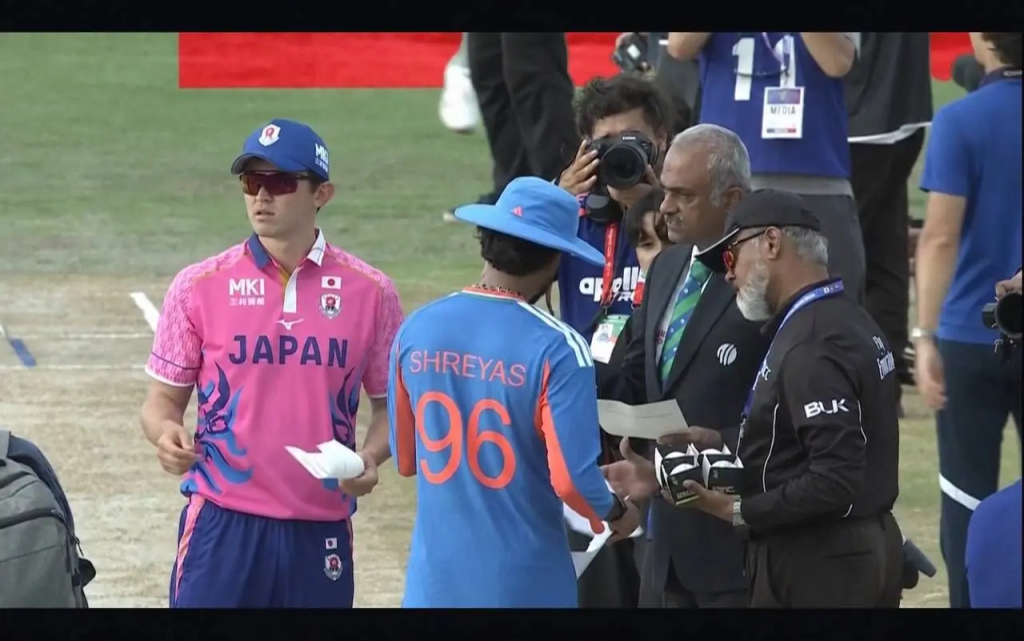
India also have several competing combinations. Hardik Pandya, Shivam Dube, Axar Patel and wicketkeeper-batters can all occupy nearby positions while offering a second skill. Selection debates are not unique to Rinku; our look at whether Shreyas Iyer fits India’s T20I side shows how quickly role, balance and reputation can collide.
So, what actually went wrong?
Rinku’s form did dip at the worst possible time, and his T20 World Cup numbers were disappointing. He also remains vulnerable to team balance because he is primarily selected for one specialist batting role. Those are real issues.
But the larger problem is opportunity quality, not just opportunity quantity. Late cameos, shifting combinations and long gaps make a finisher’s record volatile. The UP T20 League, IPL and Duleep Trophy have all shown different versions of the same player: an explosive closer, a middle-order run-maker and a technically capable red-ball batter.
What should happen next?
India do not need to guarantee Rinku a permanent place, but they should make a clear decision. If he is their finisher, give him a sustained run in that role and judge him across a meaningful set of innings. If selectors believe other combinations are better, say so through consistent selection rather than keeping him in an endless cycle of recalls and omissions.
At 28, Rinku is not a fading player. His recent domestic and IPL scores suggest he remains close to his best. What went wrong was partly form—but also timing, role confusion and too few consecutive opportunities to make the position his own.