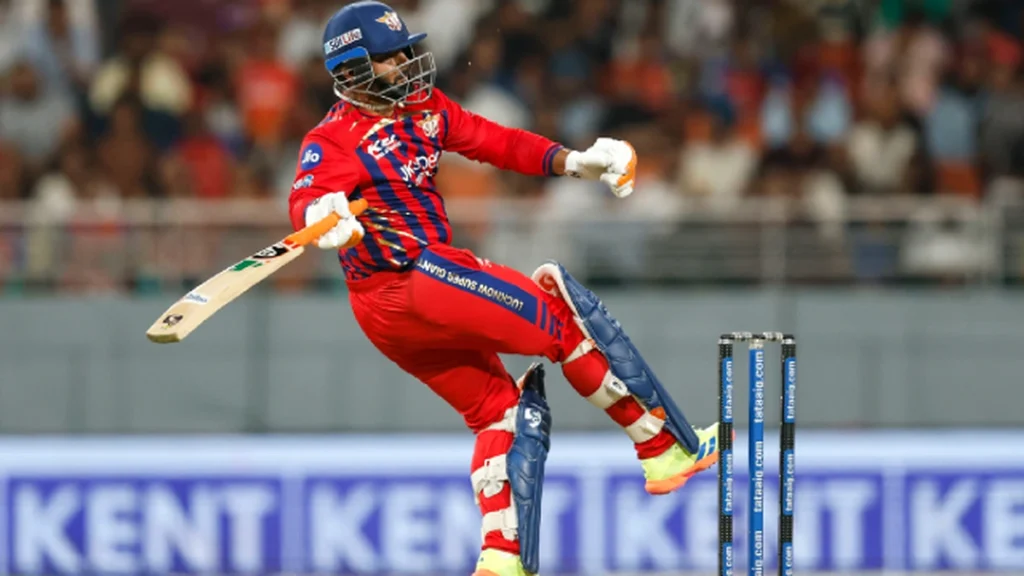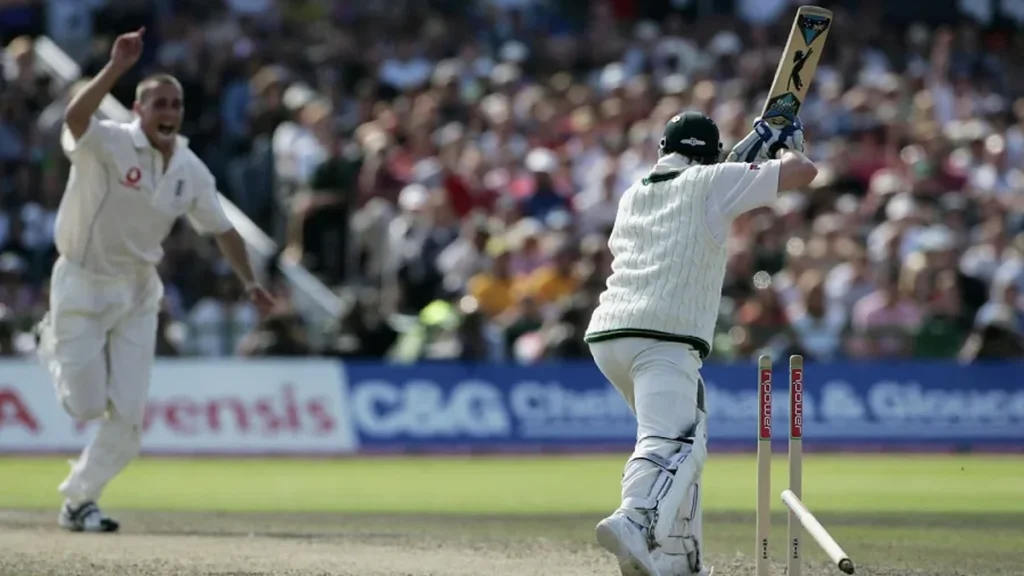
Image credit cricinfo
Playing spin bowling starts with reading length and finding a balanced position to meet the ball. Move forward when you can get close to the pitch, use the crease when the ball is shorter, and choose scoring options that suit the turn and field.
A spinner can beat a batter with flight, pace or bounce as well as sideways turn. Charging every ball or staying rooted to the crease makes those variations harder to manage. A reliable defence and a few ways to find singles give you more choices throughout the over.
Read length before deciding how much it will turn
Watch the release and keep following the ball through its flight. Notice whether it dips shorter than expected or travels flatter. Judge the line and length as well as the bowler’s usual turn. Our guide to off spin and leg spin explains the basic directions and variations.
Avoid guessing a googly or another variation and committing the body before you have enough information. A ball that travels straight on can be dangerous when the batter has already opened the bat face to allow for turn.
The surface also changes the challenge. Some pitches offer slow turn, while others create sharper bounce. Our guide to reading a cricket pitch describes clues to look for before the innings, then test against what the ball actually does.
Use forward and back-foot options
On a fuller length, move forward with the bat available to meet the ball. Getting nearer the pitch can reduce the distance over which turn affects the stroke. If the ball is too short to reach comfortably, stretching farther can leave you unbalanced.
A shorter ball may allow you to move back and create time to defend, cut or work it into a gap. Sam Billings has discussed using both the feet down the pitch and the depth of the crease when batting against spin. Read Billings on learning to play spin.
Advancing down the pitch is another option once you can judge length and recover your ground. If the bowler shortens the delivery, you need an adjustment rather than an automatic swing. Keep the threat of a stumping in mind when stepping outside the crease.
Build defence and low-risk scoring together
Defend with the bat close enough to the pad to avoid an inviting gap, while still allowing the bat to meet the ball. A stationary front pad can become a target if you rely on it instead of tracking the delivery.
Practise one or two scoring options from your defensive setup. For example, with cover deeper, a controlled push into the space in front may allow a single. With a short leg in place, closing the bat face without considering bounce could create a catch.
Kumar Sangakkara has emphasised defence and the ability to manoeuvre the ball into gaps as foundations for playing spin. Read Sangakkara’s perspective. Recognising those gaps is easier when you understand cricket fielding positions.
Choose when to sweep
The sweep can change a spinner’s line and give access to the leg side, but it still needs a suitable ball. Consider the line, expected bounce and position of square leg before committing. A low ball on the stumps leaves little margin if you miss.
Start with soft-ball feeds and a coach or capable partner. Alternate fuller and shorter deliveries, first defending and then adding a controlled scoring option. Introduce the sweep separately before mixing it into an over. Review whether the shot matched the ball, including the attempts that happened to score.
How to play spin bowling FAQs
These answers explain footwork against spin, defensive choices and how beginners can build scoring options without rushing the decision.
1. Should I always move forward against spin?
No. Fuller balls may suit forward movement, while shorter balls can be played from deeper in the crease.
2. Is sweeping the safest way to play spin?
Its risk depends on line, bounce, field and your control of the stroke. It is one option within a wider batting plan.
3. Why is judging length important against spin?
Length determines how near you can get to the pitch and how much time you have after the bounce. It influences both movement and shot choice.
4. How can I score without hitting boundaries?
Look for controlled pushes, deflections and gaps that allow a safely completed single. Recheck the field when the captain moves a fielder.
5. How should a beginner practise against spin?
Use varied soft-ball feeds to practise length judgement, defence and one scoring option. Add pace and variations gradually with appropriate coaching.